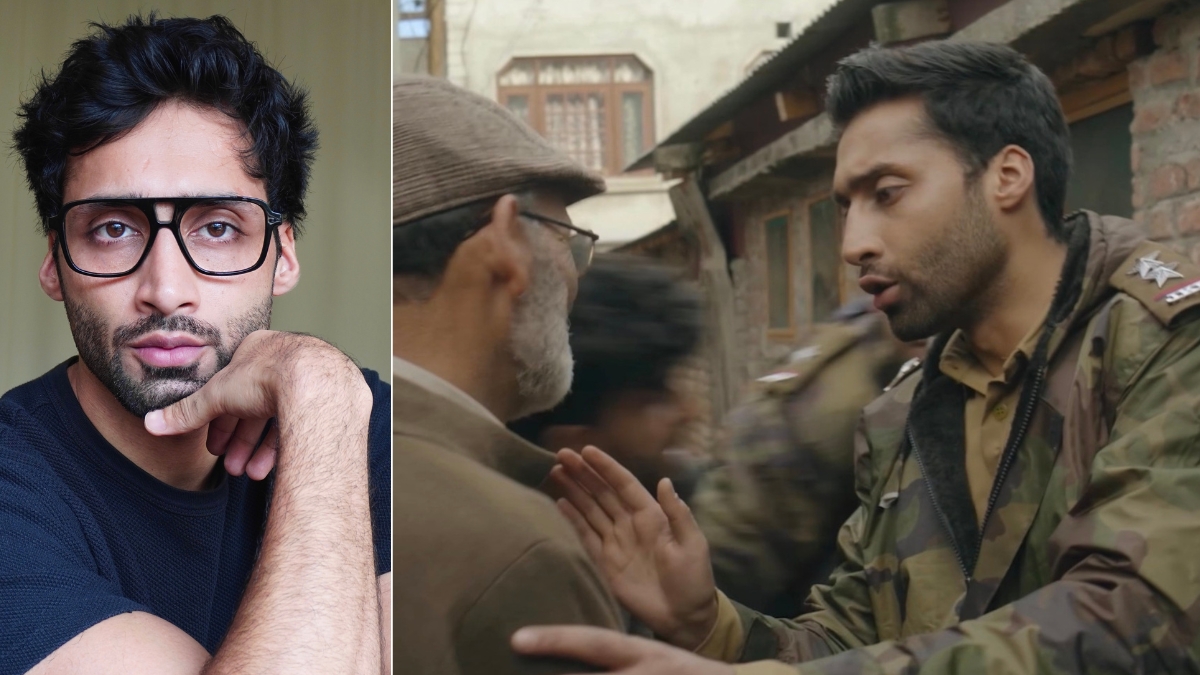
Kashmir is witnessing a remarkable cultural shift, local actors are increasingly taking on prominent roles
Salman’s journey began with a struggle to fit into the societal mould of stability and conventional careers. Like many young men in Kashmir, he applied for government jobs, encouraged by the promise of steady employment. But sitting in the exam hall for the first time, he felt completely out of place. “I looked at the question paper and realised my mind was somewhere else. People around me were focused, talking about the questions, but I could not bring myself to care. It felt like I was surrounded by robots, all programmed to follow the same pattern. I started questioning if this was really what life was supposed to be,” Salman tells India & You.
Salman adds that he felt like he was losing a part of himself by trying to fit into a system that did not resonate with him. “It was like I was becoming a stranger to myself. I kept thinking, ‘Am I supposed to spend my life doing something I do not even care about, just because that is what everyone else does? That was the moment I knew I could not go down this road anymore,” he says.
After the exam, Salmand did not even check his results. Instead, he made a decision to pursue what truly set his soul on fire storytelling and acting. “I knew it was not going to be easy, but I could not ignore the pull I felt toward creativity. It felt like a weight had lifted off my shoulders just by admitting to myself what I really wanted,” he says.
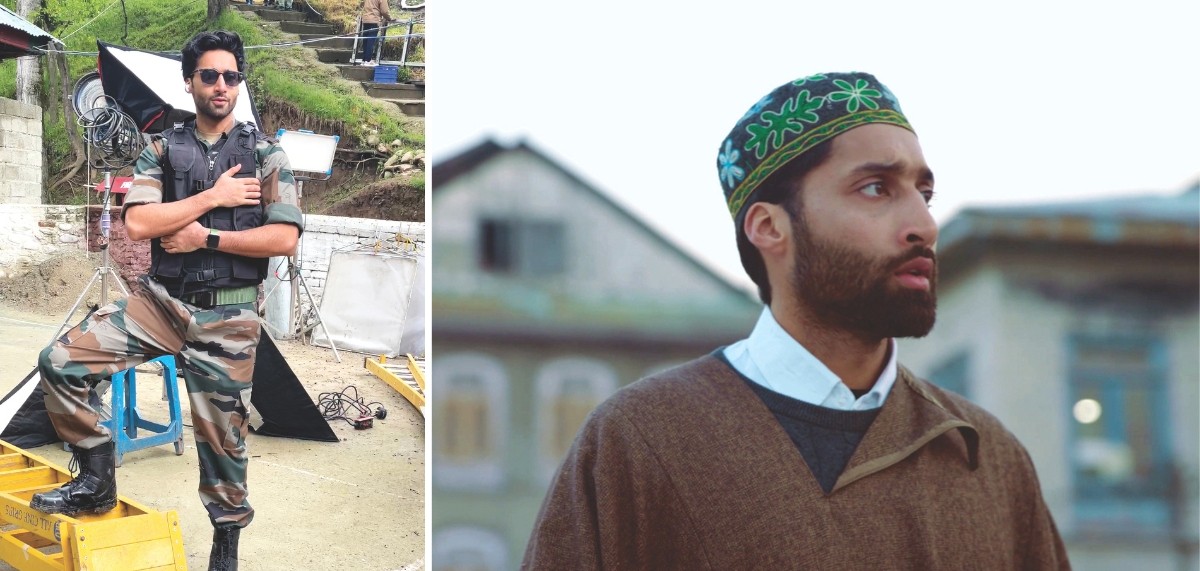
For Salman, his Kashmiri heritage is not just a backdrop to his identity it is a wellspring of inspiration that deeply informs his craft
Hailing from Beerwah in the Budgam district of Central Kashmir, Salman grew up in an environment that emphasised education and stability. Following societal expectations, he pursued a master’s degree in GIS and remote sensing a field that promised security and steady employment. However, his passion for acting was a stark departure from the conventional path, and it was not something his family initially supported.
Also Read: Return of re-release economy in Indian cinema
“My family did not accept my decision at first. They could not understand why I would choose acting over a stable, secure career. For them, pursuing the arts seemed like gambling with my future. It was not an easy conversation. There were arguments, silences, and a lot of questions like,” Salman adds.
Despite the resistance, he remained firm in his decision. “I knew they were coming from a place of love and concern, but I also knew I could not live my life trying to meet everyone else’s expectations. I told them, ‘If I do not do this now, I will regret it forever.’ Slowly, they began to see how serious I was,” he adds.
Over time, as they saw his dedication and progress, his family started to come around. “When I started getting roles and recognition, they realised I was not just chasing a dream blindly. I was working hard for it. That is when their support started to grow. Now, they are proud of me, and it means the world,” he says with a smile.
Following that decision, Salman shifted his focus entirely. Determined to follow his passion for storytelling and performance, he began exploring acting. He attended local theatre workshops, researched opportunities in cinema, and started preparing himself for a world far removed from the conventional career paths expected in his community.

Salman’s journey began with a struggle to fit into the societal mould of stability and conventional career
Salman recalls the pivotal moment when he got his first break in Mumbai, a major turning point in his career. “I got a call from Mukesh Chhabra’s casting company to audition for a role. Initially, they auditioned me for another character, but later, they called me in for Dr. Sohail role which I played in Tanaav web series. The casting process was smooth, but the shoot was delayed multiple times due to Covid-19, and there were a few moments of uncertainty with scheduling,’’ says Salman.
The moment he received the confirmation email that he had been locked for the character was unforgettable. “It was such a moment of validation for me. It was my first commercial project from Mumbai, and I was thrilled to be a part of it.” However, the wait for Tanaav, which was delayed for a year, gave him the chance to work on other projects in Kashmir, allowing him to continue practicing and honing his skills during the downtime.
Salman reflects on the journey with a clear perspective: “When you get selected, there is no real struggle. The struggle lies in dealing with the rejection, the moments of doubt, and the tough times when things do not go as planned. But all of that makes the moment of success even sweeter,” says Salman.
Also Read: Cinema’s undying obsession with regional stereotypes
However, it was Amaran, based on the life of Major Mukund Varadarajan that pushed Salman into uncharted territory. Breaking into Tamil cinema was a unique challenge for Salman, especially given the language barrier and cultural differences. For Amaran, where he portrays a Kashmiri army officer in the JAK Rifles, the journey began with an audition by casting director Taran Bajaj in Mumbai. Before he could even record a self-test, Salman was asked to meet the director, Rajkumar Periaswamy. “The associate director gave me a live audition, no camera, no lights, just raw performance. It was strange and nervewracking!” he recalls.
Impressed by his performance, the team finalised him on the spot and invited him to join action training the very next day. “The role came with Tamil dialogues, so I memorised them and learned their meanings,” he explains.
While challenging, Salman embraced the opportunity, believing that cinema transcends language and cultural barriers. “Technology has made it easier to connect with audiences across languages. Cinema has no barriers it is about storytelling, emotions, and passion,” he adds, reflecting on his transformative experience in South Indian cinema.
“I paid close attention to the crew, their tones and intonations, and worked hard to incorporate them into my performance. When people from Malaysia told me I sounded natural, it was incredibly validating,” says Salman. He describes the experience as transformative. “Amaran taught me resilience and the importance of stepping out of my comfort zone,” he adds.
Salman says his journey through the Indian film industry has been marked by a deep awareness of how Kashmiri stories are often portrayed. While he acknowledges the importance of narratives centred on conflict, he believes it is high time for a more diverse representation of the region. From his role as a conflicted character in Tanaav to his film We Are Faheem and Karun, Salman is pushing the boundaries of how Kashmir is depicted on screen, exploring its softer, more nuanced side.
“There is no resistance that I know of, but there are definitely stereotypes,” says Salman, reflecting on his experience in the industry.
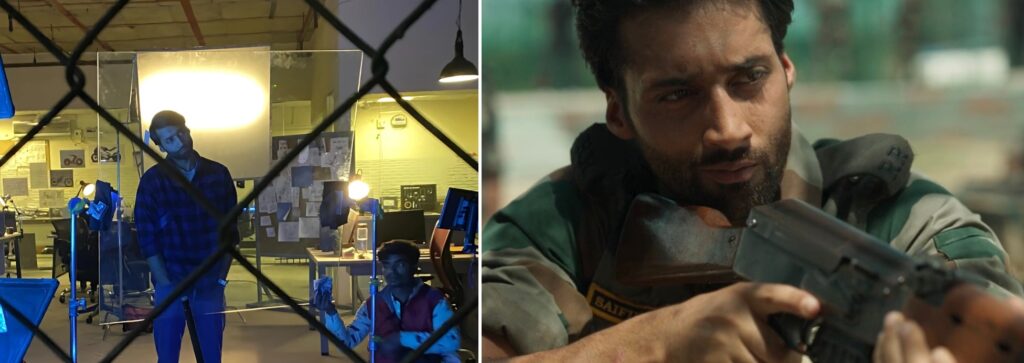
Salman’s journey through the Indian film industry has been marked by a deep awareness of how Kashmiri stories are often portrayed
“Kashmiris are often approached to play terrorists, sympathisers, or army personnel. I have done such roles, like in Tanaav where I play a terrorist sympathiser, and in Amaran where I am an Army officer from Kashmir. But Kashmir is not just about conflict. It is about drama, romance, family, sports, food, culture, music, poetry, and so much more. Sadly, those aspects are rarely explored in cinema. That is why I am so proud of my film, We Are Faheem and Karun, directed by Onir. It delves into the innocence of love and family dynamics, with much of it in Kashmiri. It is a story that showcases a different side of Kashmir, one that deserves to be seen,” Salman adds.
For Salman, his Kashmiri heritage is not just a backdrop to his identity it is a wellspring of inspiration that deeply informs his craft. Growing up amidst the unique cultural and emotional tapestry of the Valley has shaped his perspective and approach to acting, allowing him to infuse authenticity and subtlety into his performances.
“My Kashmiri heritage plays a significant role in how I approach my characters. Growing up in the Valley, I have learned to notice the unspoken gestures, silences, and layered emotions. Those nuances often help me bring a sense of depth to my performances. Acting, for me, is about staying truthful to the character while blending in parts of myself to make it feel real and relatable,” says Salman.
Also Read: Political propaganda turning Indian cinema theatres into battlegrounds
For Salman, the future is about storytelling that resonates with the essence of Kashmir while exploring universal human emotions. “I am drawn to roles that reflect depth and complexity characters with layers, struggles, and resilience,” he shares.
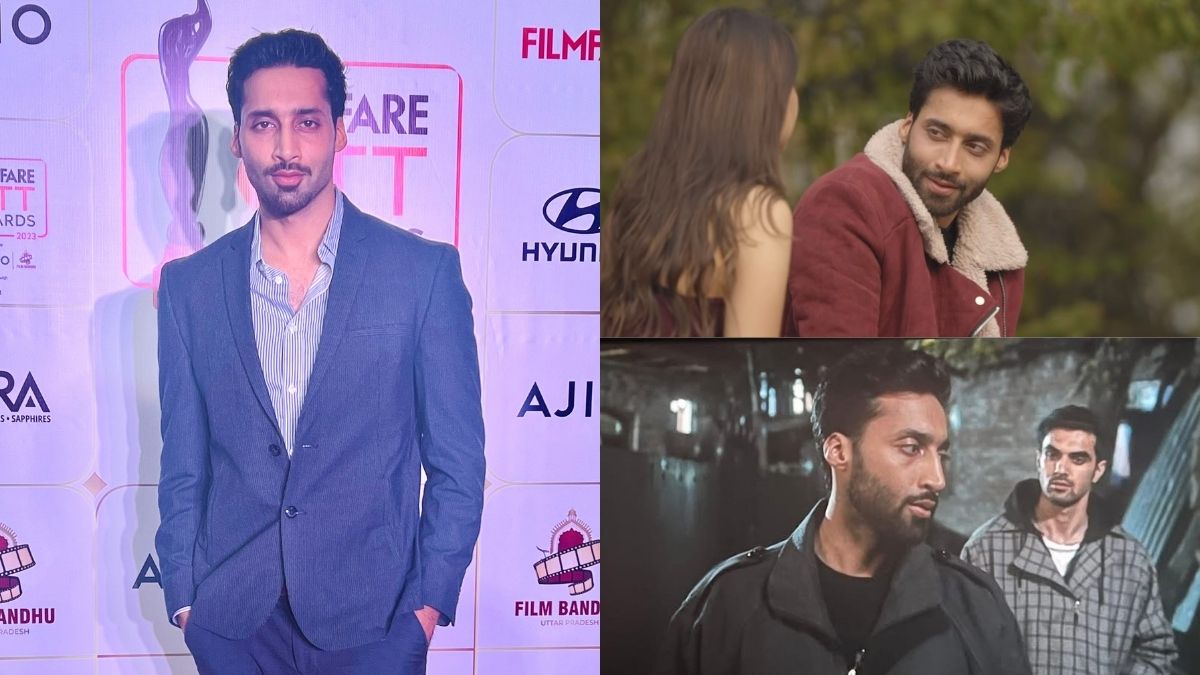
Salman is pushing the boundaries of how Kashmir is depicted on screen, exploring its softer more nuanced side
Salman believes that while there is a noticeable shift with more Kashmiris stepping into the world of cinema, there is still a long journey ahead. “Yes, there is a shift,” he says thoughtfully, “but I feel there is a lot of misrepresentation when it comes to cinema and storytelling within Kashmiris entering the industry. Not everyone, of course, but a significant percentage seems to misunderstand the essence of film and storytelling,” Mir acknowledges that the Valley is brimming with hidden talent actors and filmmakers whose work he finds remarkable.
“Kashmir has immense talent, but many of these artists remain undiscovered because they lack a platform to showcase their skills,” he adds.
“In some ways, I feel like we are genetically artists. Just look at our music, art, handicrafts, and poetry they are extraordinary,” says Salman.
For Salman, addressing the lack of exposure and judgment that many Kashmiri artists face is key to unlocking the region’s creative potential.
“We have a long way to go, but I believe the future is bright for Kashmiri talent,” says Salman.