
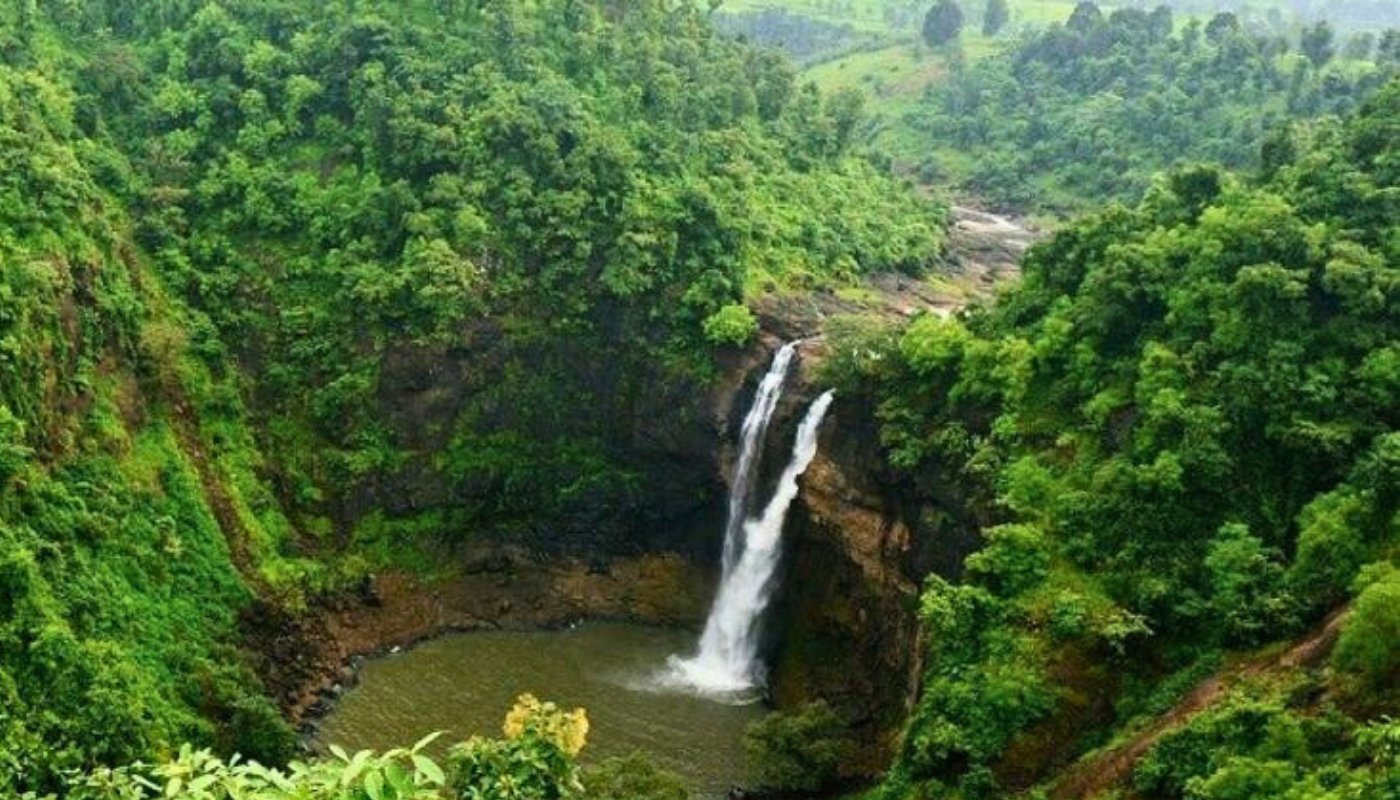
Jawhar is enveloped by thick forests, deep valleys and a pollution-free environment year-round
Jawhar, a hill station nestled in the Sahyadri ranges, located in the Palghar district of Maharashtra that is known for its lush greenery, rich tribal heritage and historical significance, offers visitors a peaceful escape surrounded by nature and culture.
Situated about 120 km from Mumbai, it is accessible by road and takes around four hours to reach from the city.
Jawhar is enveloped by thick forests, deep valleys and a pollution-free environment year-round. One of the town’s most famous natural attractions is the Dabhosa Waterfall, which plunges from a height of about 91 m. This waterfall is a magnet for nature lovers and photographers.
Apart from Dabhosa, there are other serene spots like the Hiradpada Waterfall and the Khad-Khad Dam, which provide peaceful surroundings ideal for relaxation and family outings.
Jawhar also features viewpoints like Hanuman Point, which stands at a height and provides a stunning 360° panoramic view of the lush landscape around the town. Here, visitors can also see a 152 m deep green valley known as Devkobacha Kada.
It carries a deep cultural heritage with a history dating back to its founding by Raja Jayaba Mukne in 1343. It was once the capital of the Mukne princely state, and this legacy is visible in its historical landmarks. The most notable among these is the Jai Vilas Palace, also called Raj Bari, which served as the royal residence of the Mukne rulers. Built in the early 20th century, the palace showcases neoclassical architecture complemented by sprawling gardens.
Another significant historical site is Shirpamal, a location where the legendary Maratha king, Chhatrapati Shivaji Maharaj, is believed to have camped while moving towards Surat.
The nearest airport is the Nashik Airport, about 80 km from Jawhar, while the closest railway station is the Igatpuri station, also located in Nashik, providing convenient options for travellers coming from different parts of Maharashtra or beyond.
Visitors often start early morning trips from Mumbai or Thane and explore Jawhar’s scenic and cultural highlights in a day or two. The ideal time to visit Jawhar is during the monsoon months from July to September when the waterfalls are at their most magnificent.
