Echoes of the Mikir Hills: Assam’s folk songs that live through ritual and memory
Music, myth and everyday life in a forested landscape

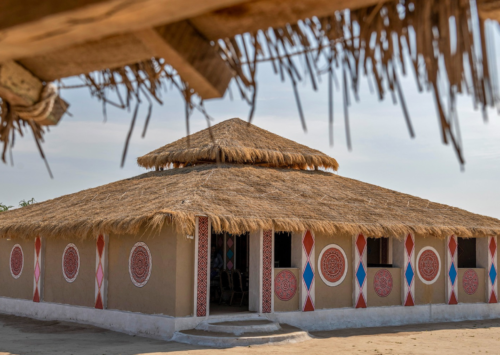
Celebration where tribal families come together to sing folk songs rooted in rice beer rituals, forest traditions and age old storytelling (Photo: Utsav)
Rongker, a traditional Karbi ritual observed in Assam’s Mikir Hills, is a key cultural practice where tribal families perform folk songs during rice beer ceremonies, forest rituals and storytelling sessions. Held on dates decided by village elders, the ritual reflects the community’s deep connection with nature and ancestral traditions.
Celebration where tribal families come together to sing folk songs rooted in rice beer rituals, forest traditions and age old storytelling (Photo: Utsav)
In Assam’s Mikir Hills, a unique festival where tribal families perform folk songs tied to rice beer ceremonies, forest rituals and storytelling. These songs are seldom recorded, and passed instead from one generation to the next through memory and practice, making them a fragile yet powerful part of India’s cultural heritage.
For the communities of the Mikir Hills, music is not entertainment in the modern sense. It is woven into daily life. Songs are sung during important moments such as the autumn harvest in October-November, the brewing of rice beer in the winter months of December-January, seasonal forest worship and evening gatherings when elders recount stories of the past. Each song carries meaning rooted in land, nature, and collective experience.
Music tied to rice beer and ritual
During rice beer ceremonies, families sing Karbi folk songs such as Hor Longle and Lunse, which focus on fertility, rain, harvest and gratitude to nature. These songs are performed while rice ferments in earthen pots, with verses changing according to the singer and the moment.
During forest rituals, elders sing Arnam Kangthir invocatory songs and hymns dedicated to dieties Hemphu and Mukrang, seeking protection and balance with forest spirits. Passed down orally, these songs remain a living part of Karbi ritual life.
Also Read: Shompen: Existence of Nicobar’s oldest residents threatened by ‘development’
Storytelling through songs
Evenings in the villages often turn into informal storytelling sessions. Elders sing long narrative songs that recount migration histories, village legends, moral lessons and encounters with animals and spirits. In the absence of written records, these songs function as living archives. Children learn by listening repeatedly, slowly absorbing both melody and meaning.
Simple instruments such as hand drums, bamboo flutes or rhythmic clapping may accompany the singing, but the human voice remains central. The focus is on sharing, not performance. There is no stage, no audience, only participation.
The folk songs of the Mikir Hills offer a rare and intimate glimpse into tribal life in Assam. It tells us that culture does not always live in archives or recordings. Sometimes it carried in voices, forests and shared moments, waiting to be listened to before it fades. Changes in land use, deforestation and modern influences have also affected the spaces where these traditions once thrived.