
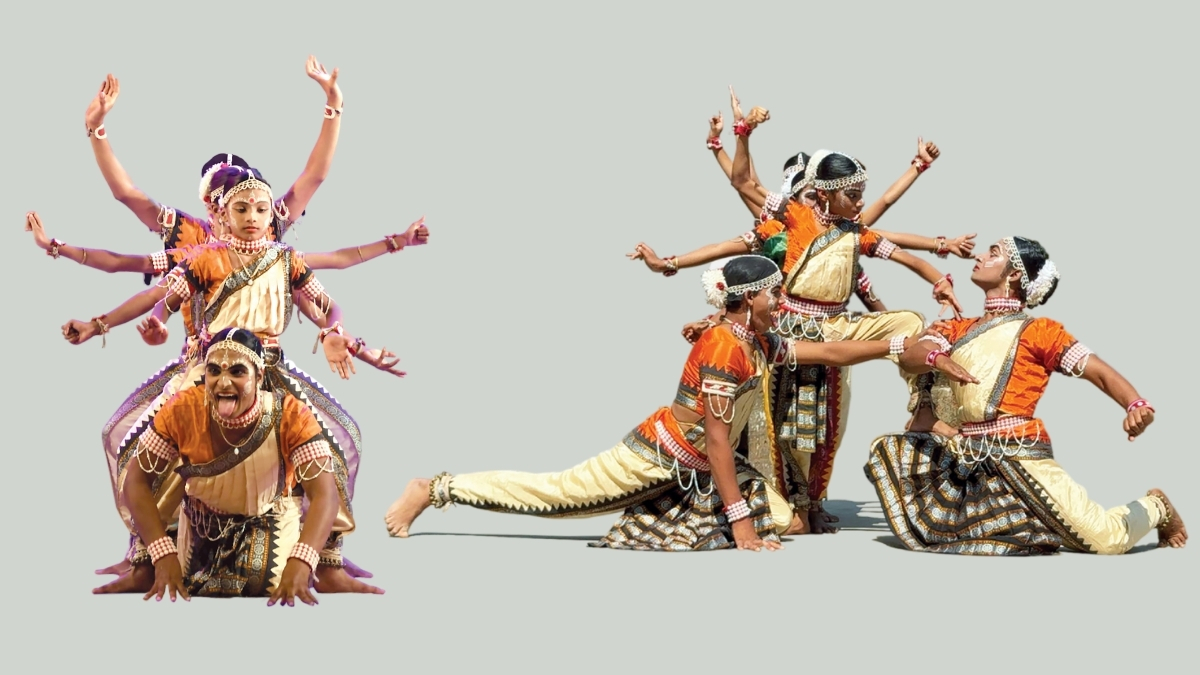
Gotipua dancers performing Odisha’s traditional dance with graceful acrobatic movements ( Photo: Abhinna Sundar Gotipua Nrutya Parishad )
The eyes of a young boy, no older than six, are wide with a mixture of excitement and trepidation. He poses to give a dramatic side stare while his face is painted with red and white powder by deft fingers, guided by generations of custom. The make-up artist applies kohl to demarcate his eyes, lending them an elongated, almost feminine look. At the end, it is not just makeup, it is a transformation and the first step in becoming a Gotipua dancer, a living embodiment of Odisha’s rich cultural and spiritual heritage and a rare tradition where young boys perform as mature female dancers.
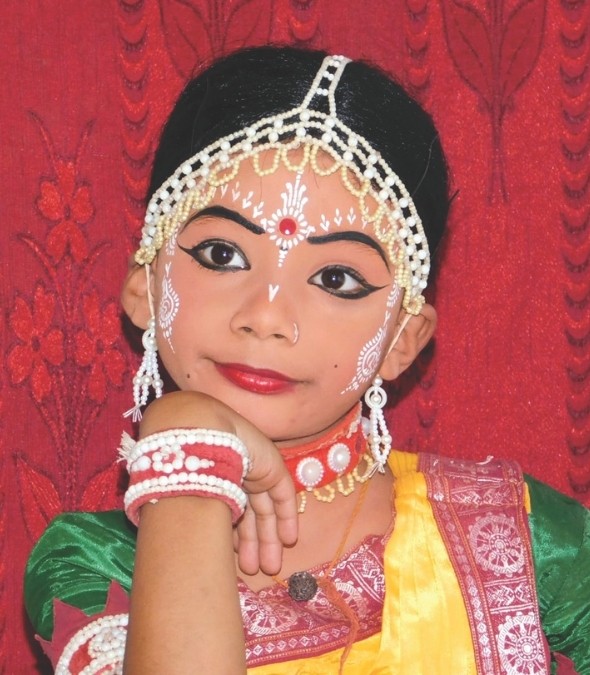
Young Gotipua dancer in traditional attire ( Photo: Abhinna Sundar Gotipua Nrutya Parishad )
The origins of the dance form date back to several centuries ago and as in many other classical traditions of India, Gotipua dance has been is handed down between generations.
“The tradition of Gotipua dance in my family has been there for three generations. I was two years old when I started dancing. I learnt it from my father, Laxman Moharana, and my elder brother,” Prasanta Kumar Moharana, a student of Abhinna Sundar Gotipua Nrutya Parishad, a dance academy located at Puri in Odisha, tells India & You.
Gotipua, a lively and age-old art form of Odisha, a state in eastern India, is a fascinating manifestation of devotion and artistry that has been preserved for centuries. The traditional dance honours Lord Jagannath and is performed only by young boys dressed as women. It is distinguished by its distinctive fusion of acrobatics and elegant movements. This dance is a forerunner of the more well-known Odissi dance and is aptly described by the Odia word Gotipua, which means ‘single boy’.
The dance has its roots in the 16th century, when it first appeared following the decline of ‘Maharis’ or female temple dancers. This very old tradition is demonstrated by the dancer sculptures on the bas-reliefs of the well-known temples, such as the Sun Temple in Konark and the Jagannath temple in Puri.
With the decline of female dancers in temples, the young boys began to replace them. Through intense practice and commitment, these boys, who frequently begin their training at the young age of five or six, learn to embody the divine. Their androgynous looks start to diminish as they age, which is a significant turning point in their dancing careers. Through elaborate movements and acrobatic postures known as Bandha Nrutya, the performance itself celebrates the life and love stories of Radha and Krishna.
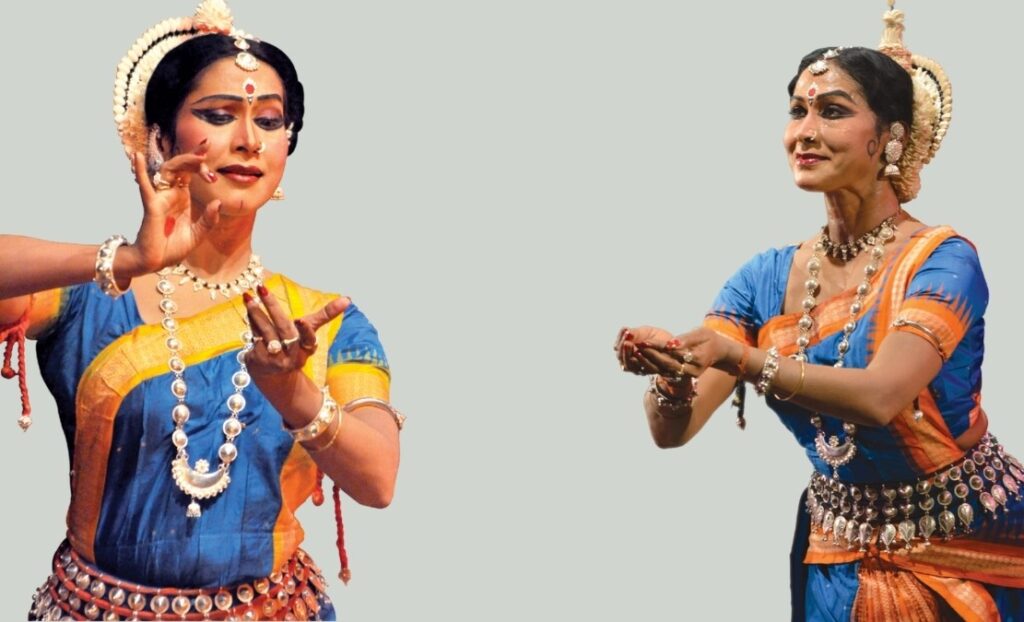
Odissi dancers performing graceful traditional movements in vibrant costumes and ornate jewellery (Photo: Gurukeerti Institution)
“Gotipua basically started as a dance form parallel to the Mahari tradition, based on the philosophy of Gaudiya Vaishnavism. The dance form started during the reign of King Ramachandradeva, in the 17th century. Maharis did not have a grammar for their dance, and their offering was mostly Bhavatmaka and mostly singing. Some dance movements were added later when Gotipua Gurus started training the Maharis,” Sujata Mohapatra, an Odissi dancer, who also runs Gurukeerti Institution, a dance academy in Balasore, Odisha, tells India & You. Mohapatra adds that Odissi, the most famous classical dance of Odisha, also draws heavily on Gotipua.
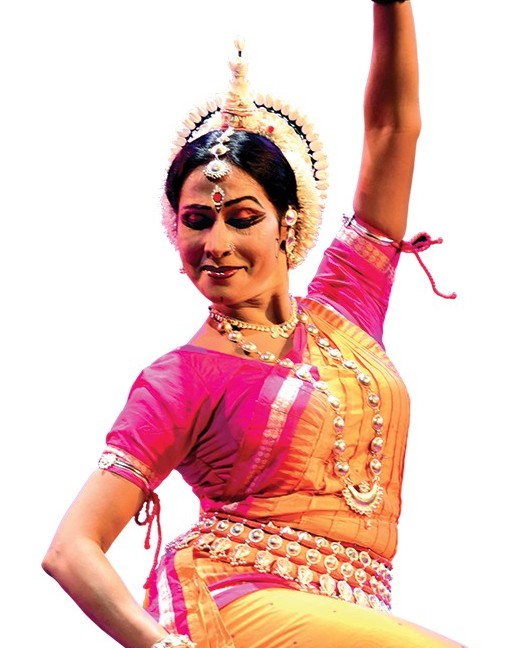
Sujata Mohapatra
Gotipua, which combined feminine elegance with masculine strength, became a vibrant alternative as the Mahari tradition faded. In addition to preserving old dance customs, Gotipua’s development had a big impact on Odissi’s growth by introducing technical elements like Bandha Nrutya and Aharya.
“The grammar of Odissi mostly comes from the Gotipuas and not much from the Maharis. The repertoire of the Gotipua, like Sthayee (Thai Nata/Thei Ghara Nata), Pelavi (Pallavi), and Natangi (Abhinaya), was all incorporated into the Odissi repertoire. Bandha Nrutya was an integral part of the Gotipua repertoire that was also incorporated into Odissi by Guru Deba Prasad Das. Even the Aharya broadly come from the Gotipuas; however, they didn’t wear metal ornaments,” she says.
“Most of the present-day gurus of Odissi dance were Gotipua in their young days. I have a strong connection with an experienced Gotipua dancer who is none other than Guru Kelucharan Mohapatra. In his choreography we can see the influence of Gotipua style, in pure dances like Bilahari Pallavi, Basanta Pallavi, Kirwani Pallavi and Behah Pallavi. He has brought various rhythmic patterns of Gotipuas into Odissi dance. Guru Kelucharan Mohapatra’s technique is very unique, which is clearly a reflection of his early childhood training of the Gotipua dance,” Mohapatra adds.
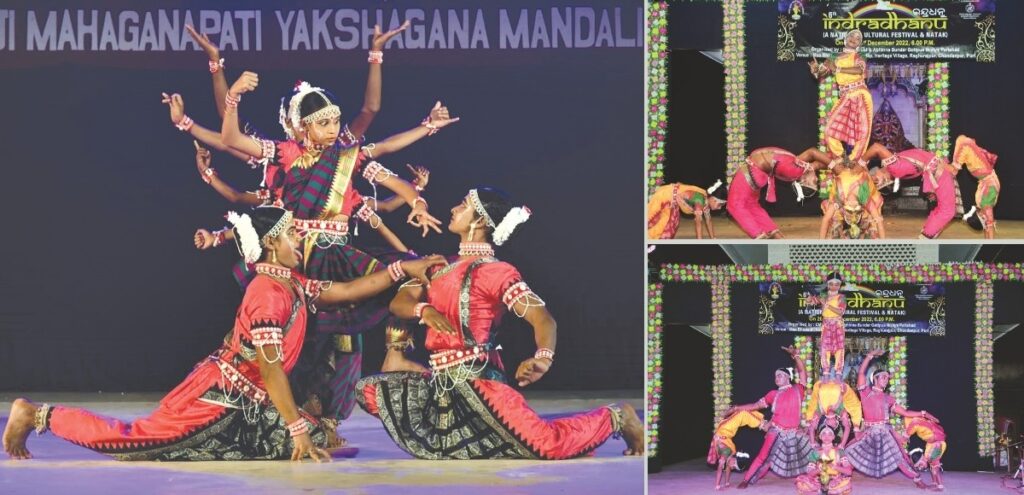
Gotipua dancers performing an energetic traditional dance with intricate acrobatic formations on stage ( Photo: Abhinna Sundar Gotipua Nrutya Parishad )
Transformation from young boy to feminine figures
It is astounding how Gotipua young dancers transform into female figures with makeup and costumes. Equally unique is the jewellery that they wear.
Moharana talks about how the dancers dress up for their performances. “Our hair is styled into intricate knots and adorned with flower garlands instead of being cut. A blend of red and white powder is used to paint our faces and kajal is applied around our eyes to give them an elongated appearance. The traditional outfit includes an embroidered silk garment called nibibandha, which is worn around the waist and a kanchula, a coloured blouse adorned with glittering decorations. Anklets that highlight our rhythmic footwork blend in with beaded bracelets, armbands, ear ornaments and necklaces. A red liquid called alta is frequently used to paint the palms and soles, enhancing the aesthetic appeal,” he says.
Also Read: Pichora: Timeless traditions of Kumaoni bridal wear
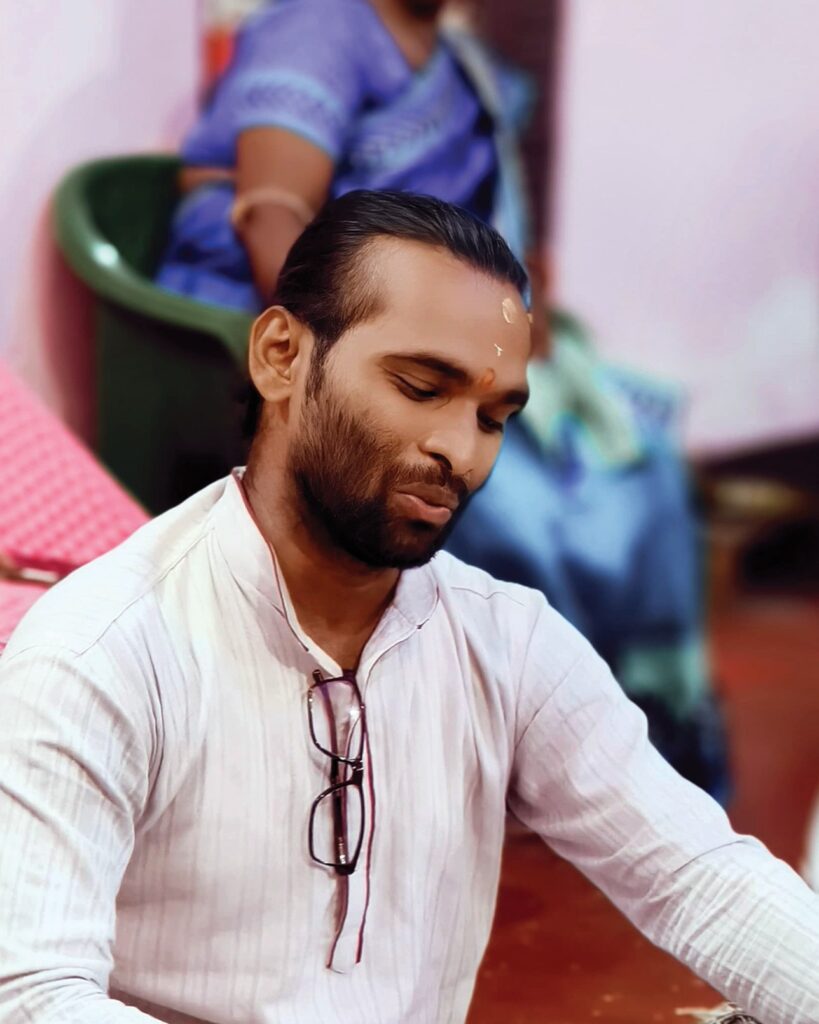
Basanta Kumar Moharana
Moharana’s elder sibling, Basanta Kumar, took charge of the dance academy once their father handed over the reins. The elder sibling has been running the institution for over two decades now and says that the academy has worked towards keeping the traditions alive.
“For the past 10 years, our institute has worked to popularise and promote the traditional Gotipua dance. Numerous dancers have been trained by the institution under their skilled guidance, many of these individuals have gone on to become successful Odissi dancers, gurus and instructors in their own right. The institute offers its students formal education up to the 10th grade in addition to dance instruction. The boys spend at least six years living with the guru, where they become fully immersed in the spiritual and technical facets of this distinctive dance style. At the moment, there are 35 boys who are six years old. The institute has been instrumental in bringing this Odisha traditional dance back to life through the performances. In addition to increasing Gotipua’s popularity in India, our endeavours have won praise overseas, guaranteeing the survival of this rich cultural legacy,” the elder Moharana tells India & You.
He adds that Gotipua dance requires intense training. Under the supervision of their guru, young boys reside in a gurukul, a traditional boarding school in ancient India, where they are taught dance as well as formal education. Mastering this art form requires a great deal of discipline; students must practice every day to hone their skills and fully inhabit the roles they play on stage.
“The Gotipua dance is not just about performance, it is about preserving our culture and spirituality. Every movement conveys a timeless tale,” says the younger Moharana.
Not only is the preparation for Gotipua extensive, but the choreography and performances are also elaborate and they frequently feature traditional instruments like the mardala, a two-headed drum, harmonium, flute and cymbals, that reflect the lyrical beauty of the traditional music. A captivating ambiance is produced by this tasteful blending. But to be able to achieve that, the students need extensive and regular training, which is indeed very demanding on the body and the mind.
“Every day is a new challenge. Every performance makes the difficult training worthwhile. The student has to be fluent at dance, teaching, singing and playing the instruments to become a Gotipua,” says the Director of the academy.
Gotipua is a vibrant tradition that has been passed down through the generations and is more than just a dance. From its 16th-century beginnings to its impact on Odissi, Gotipua is a symbol of devotion, artistic skill, and the harmonious fusion of feminine and masculine energies. The rich cultural and spiritual legacy of Odisha is passed down to young boys as they develop into elegant dancers, guaranteeing the survival of this alluring custom.
