
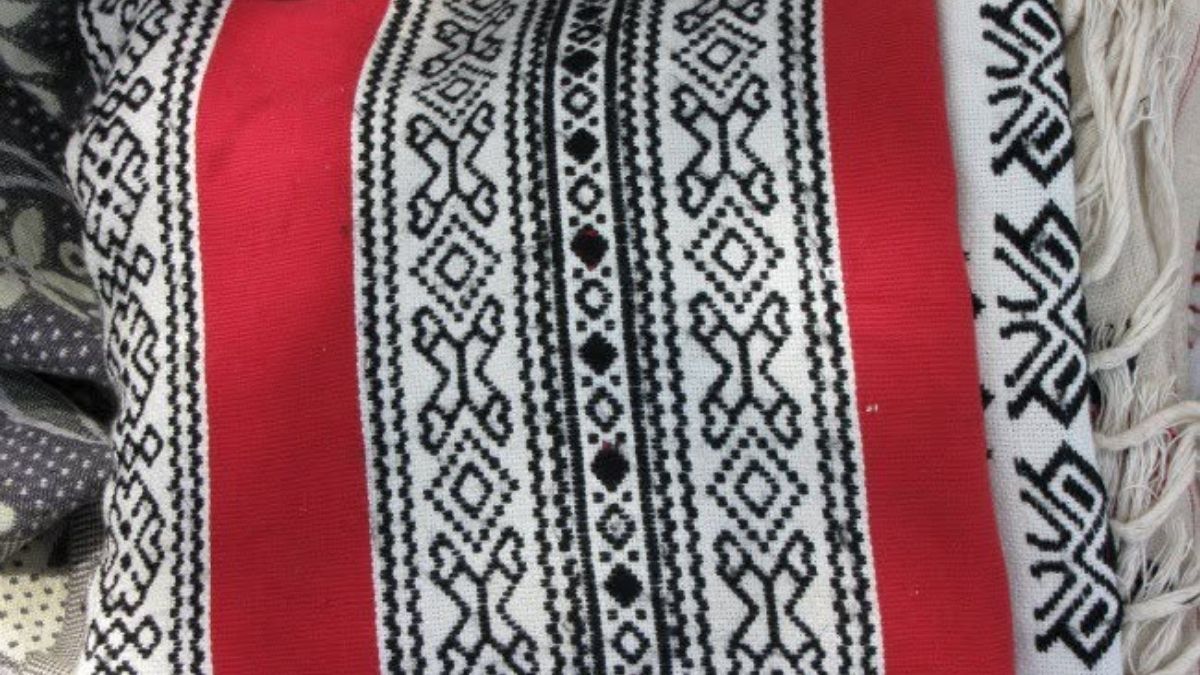
Modern fashion and tourism are giving Toda embroidery greater visibility and new economic opportunities, helping sustain a craft that is traditionally practised by Toda women (Photos: Ministry of External Affairs, India)
Toda embroidery, locally known as Pukhoor, is a distinctive expression of its cultural identity. Traditionally practiced by the women of Toda tribe, a community inhabiting the Nilgiris in southern India, the craft uses red and black threads on white cotton to create intricate geometric patterns that give the fabric a woven appearance. The motifs draw inspiration from nature, buffaloes, celestial bodies and Toda beliefs, turning clothing into an expression of cultural identity.
The Toda community, rooted in the Udhagamandalam of the Nilgiri Hills or the “Blue Hills,” of Tamil Nadu, the area is part of the traditional homeland of Toda community and has preserved its distinctive embroidery tradition across generations. Toda embroidery faces a fragile future, with only about 500 women reportedly practising it. While youth participation remains limited, some younger artisans are adapting the traditional craft for contemporary markets.
A cultural identity preserved through embroidery
Toda embroidery has no precisely documented beginning and its history survives primarily through generations of women who have carried an ancient tradition and craft, that was passed orally and practically from mothers and older women to younger generations. Over the past century, Toda embroidery has gradually moved beyond community use and entered the commercial and fashion markets across India.
Also Read: Chapchar Kut: Spring festival of community and culture in Mizoram
Historically, the embroidery was closely associated with the Toda poothkuli, a traditional white cloak worn by both men and women, particularly during ceremonies and important stages of life. Women developed intricate geometric designs by counting the threads of the cotton fabric and using red and black woollen thread.
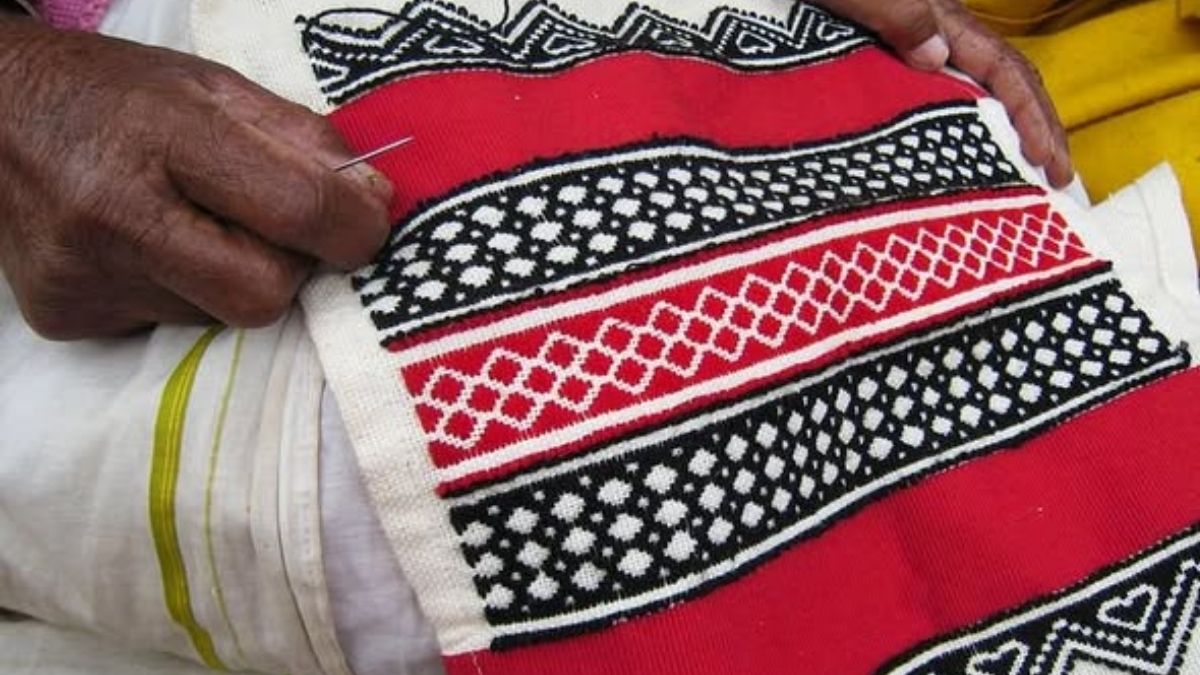
Toda embroidery is more than an intricate arrangement of threads; it is a living record of the community’s identity, beliefs and relationship with the Nilgiris
Toda embroidery represents the culture of the community by turning traditional clothing into a visual expression of identity, beliefs and connection with nature. The intricate geometric motifs are inspired by elements of the Nilgiri landscape, animals, plants and celestial forms, while references to the sacred buffalo reflect the community’s pastoral and spiritual traditions.
Women sustaining a living tradition
Toda women have played a central role in keeping the community’s embroidery tradition alive. They often work collectively, gathering on verandas or beneath trees as they meticulously hand-embroider textured fabrics over several weeks. The craft’s distinctive character lies in its reversible embroidery, with intricate patterns visible on both sides of the cloth.
Also Read:84 pc Indians interested in culture-led domestic tourism: Skyscanner
Beyond preserving a form of cultural expression, women artisans have also helped sustain the craft as a source of livelihood by producing traditional garments and adapting embroidery for contemporary products. Their continued practice ensures that the skills and cultural meanings embedded in Toda embroidery are not lost as lifestyles and occupations change.
Keeping tradition alive in a changing world
Modern fashion and tourism are giving Toda embroidery greater visibility and new economic opportunities, helping sustain a craft that is traditionally practised by Toda women. Designers are incorporating its distinctive motifs into contemporary products such as bags, jackets, stoles and accessories, while tourists provide an important market for handmade pieces. The challenge is to embrace new markets while ensuring that the traditional techniques, meanings and community ownership remain intact.
Cultural tourism offers another avenue for sustainable growth, craft villages, cultural centres and live demonstrations could allow visitors to experience the embroidery process, understand its history and purchase authentic products directly from artisans. At the same time, documenting traditional motifs, techniques and the stories of artisans, along with museum exhibitions and digital archives, would help safeguard the knowledge for future generations.
Toda embroidery is more than an intricate arrangement of threads; it is a living record of the community’s identity, beliefs and relationship with the Nilgiris.
