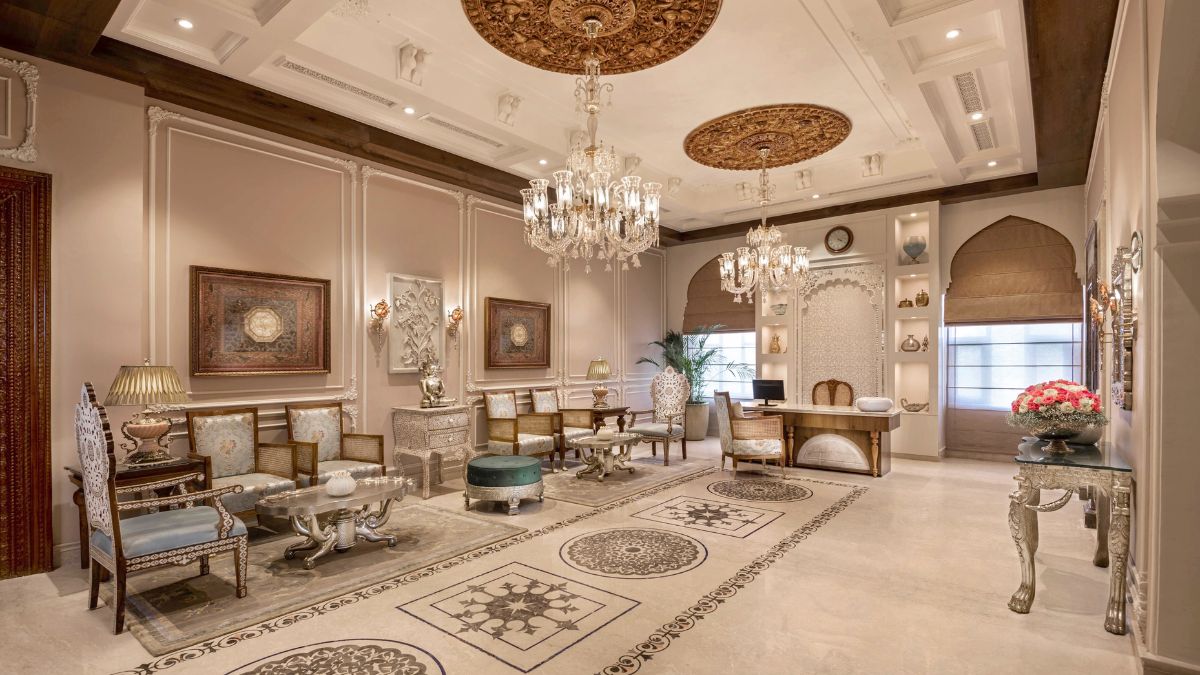
Noor Mahal’s ornate interiors reflect the growing appeal of heritage-led luxury among India’s domestic travellers (Photo: Noor Mahal)
Indian luxury hospitality market is entering a period of rapid expansion, with major hotel groups building significant pipelines across the country. Leading the charge is Taj Hotels, the most upscale brand of the largest hospitality firm in India, IHCL. While Taj already has more than 250 properties in India, it is developing another 263 hotels and has set a target of operating more than 700 hotels in the country by 2030. Taj’s homegrown rival, Oberoi Hotels, operated by EIH, plans to add another 20 ultra luxury properties. Belgian hotel group, Radisson operates 142 properties, with 98 more in the pipeline and is targetting 500 hotels by 2030. Accor has around 71 properties, with more than 40 in the pipeline and a target of 300 hotels by 2030. The expansion reflects not just growing hotel supply, but a fundamental shift in how Indians view luxury hospitality.
India’s luxury hotel segment is poised for significant expansion, with 77 hotels comprising around 11,800 keys currently under active development and expected to open by 2031, according to Hotelivate-Savills, a specialised hospitality consulting and advisory firm operating across the Asia Pacific and Middle East regions. This pipeline represents nearly 66 pc of the country’s existing 29,000 luxury keys, suggesting that the segment could almost double in size. The growth follows the opening of 13 luxury hotels in 2023–24, highlighting the increasing focus on high-end hospitality in India.
Driving this growth is an explosion in demand for luxury hotels, as an increasing number of Indians are willing to spend on a luxury hotel for anything. From organising a marriage to a weekend break, or a family holiday, a celebration or simply for the experience. As a result the concept of luxury hotel is moving from being an exclusive space for a small affluent class to becoming an aspirational product that a much wider group of Indian travellers can access. This does not mean luxury hotels have become inexpensive. Room rates at premium properties remain high. What has changed is the consumer’s willingness and ability to pay for the experience.
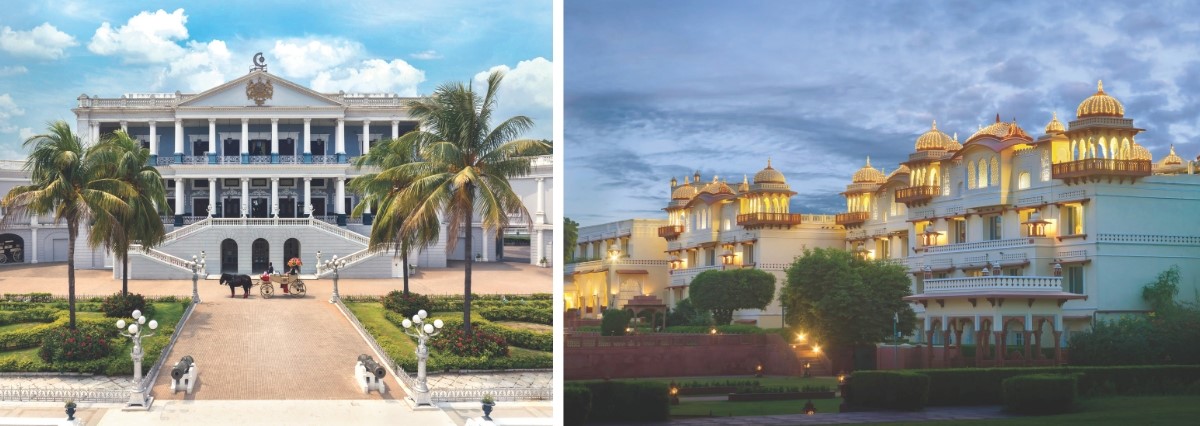
Taj blends heritage architecture with contemporary luxury and personalised hospitality (Photos: IHCL)
Revenues of Indian hospitality industry is set to grow by 7-9 pc in FY2027, following a 9-12 pc growth in FY2026, according to rating agency ICRA. Across India, occupancy in premium hotels stood at 72-74 pc in FY2026, up from 70-72 pc in FY2025. Average Room Rates (ARR) for the same segment rose to INR 8,200- 8,500 in FY2026 from INR 8,000-8,200 the year before, and are projected to reach INR 8,600-8,800 in FY2027.
Despite all these, the hospitality is unable to keep up with the growing demand as premium room inventory across 12 key cities is growing 5-6 pc a year, while demand is growing 8-9 pc.
Luxury moves into the mainstream
A major change in the customer profile for the luxury hotels is that demand is not driven by overseas visitors as an overwhelming share of the volume behind that demand is domestic. India recorded 4.29 billion domestic tourist visits in 2025, up 45.6 pc from 2024, according to Ministry of Tourism data. Foreign tourist arrivals stood at 9.15 million in 2025, with total international tourist arrivals, including NRIs, at 20.22 million, figures that have grown steadily but remain a fraction of the domestic count.
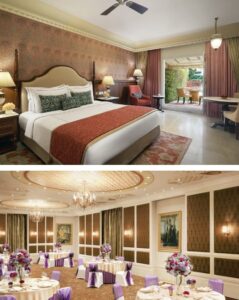
Taj banquet spaces cater to growing demand for weddings, celebrations and other occasion-led luxury stays (Photos: IHCL)
The Indian Hotels Company (IHCL), the largest hospitality firm in the country which is best known for its Taj hotels, has 650 hotels including 282 in the pipeline, across four continents, 15 countries and more than 300 locations. Its premium brand, Taj, alone counts 150 hotels in 15 countries and was named India’s Strongest Brand 2026 across all sectors, and World’s Strongest Luxury Hotel Brand 2026, by Brand Finance-UK.
Puneet Chhatwal, Managing Director & CEO, IHCL, ties the wider access to how the company now reaches its customers.
“Consumer expectations today are shaped by immediacy, personalisation and seamless experiences. Customers increasingly expect brands to understand their preferences, simplify decision-making and deliver highly relevant interactions across every touchpoint. From AI-enabled search and conversational interfaces to enhanced personalisation engines and smarter guest engagement platforms, technology is helping us better understand our guests and respond with greater speed, relevance and precision,” Chhatwal tells India & You.
Chhatwal points to culture and sustainability as the other side of the pitch to a wider client base, with curated experiences around Rajasthan’s Bishnoi community, Jaipur’s Blue Pottery, Mysuru Dasara, Durga Puja in Kolkata and the Ganga Aarti in Varanasi.
At the company level, the numbers show what wider access has meant for the business itself. IHCL’s like-for-like portfolio reported 78 pc occupancy and an ARR of INR 17,216 in FY2025, up from 77 pc occupancy and INR 15,626 in FY2024; RevPAR rose to INR 13,448 from INR 12,010.
Beyond the big cities
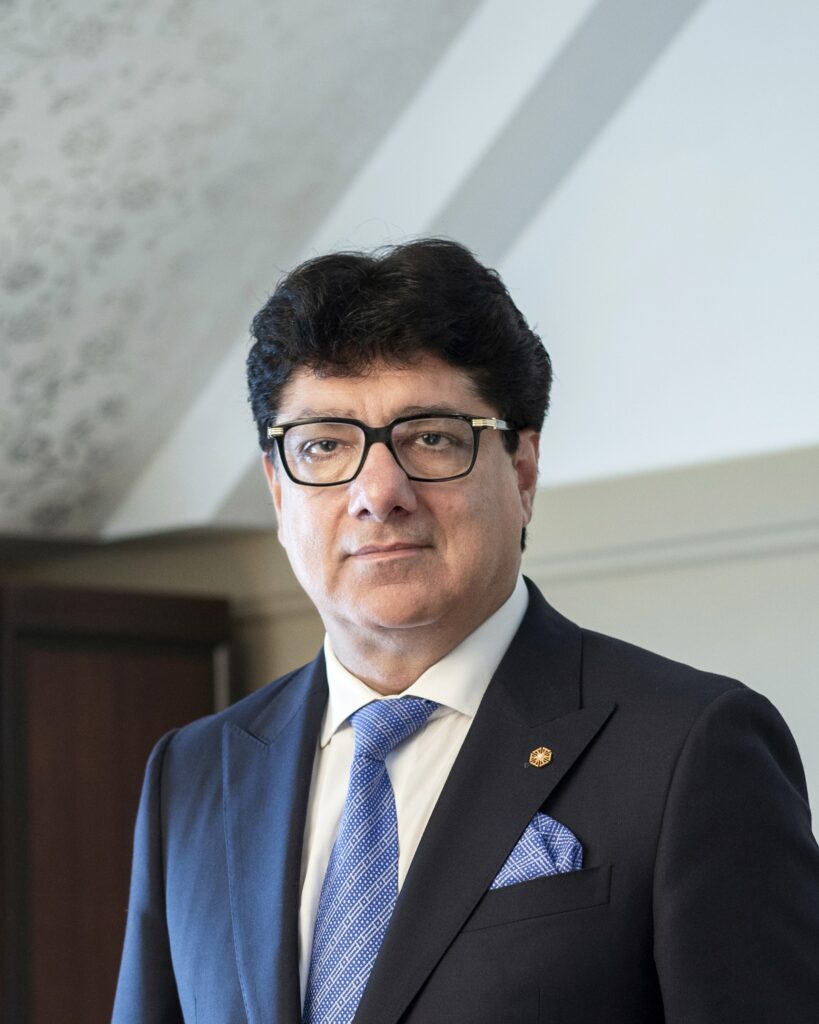
Puneet Chhatwal
If luxury hotels were once concentrated in a handful of gateway cities, that is no longer where the real growth is. Radisson Hotel Group, a hospitality firm based in Belgium, is targetting 500 hotels across South Asia by 2030, and more than half its current India portfolio already sits in Tier II and III cities. The company is focussing on taking its luxury brand nationwide.
“Our expansion strategy has always been guided by the belief that premium hospitality should be accessible beyond India’s traditional gateway cities. We are strategically expanding our footprint across metros as well as emerging destinations, bringing internationally benchmarked hospitality to a wider consumer base. By offering a diverse portfolio of brands tailored to different traveller preferences and destinations, we are making premium hospitality more accessible without compromising on the quality, service and experiences that define the Radisson brand,” Nikhil Sharma, Managing Director & COO, South Asia, Radisson Hotel Group tells India & You.
Also Read: Mizoram government partners Polo Hotels for first five-star hotel
Sharma reels off names of cities driving this expansion with Sonipat, Raipur, Dera Bassi, Jhansi and Kevadia among them.
“Rising disposable incomes, improving infrastructure, enhanced air connectivity and growing demand for organised hospitality have transformed these cities into vibrant travel destinations. Our focus remains on identifying markets with sustainable long-term demand and introducing the right brand for each location, while creating local employment and supporting regional tourism development,” says Sharma.
Meet the new luxury client
The profile of India’s luxury hotel customer is changing. Travellers are no longer booking premium stays only for business or special occasions, but are increasingly spending on leisure, wellness, food, staycations and destination weddings. Sharma says this shift is creating a broader mix of demand, with business travel remaining important while leisure and weddings are emerging as major growth segments.
“Today’s travellers are more digitally connected and increasingly experience-driven. While business travel remains important, travellers are equally seeking meaningful leisure experiences, wellness retreats, staycations, culinary journeys and destination-led holidays,” says Sharma.
Demand, he says, is now a mix rather than a single category. While business travel remains a pillar in commercial hubs, leisure has picked up sharply, and weddings have become one of the fastest-growing segments, with multi-day destination weddings driving volume.
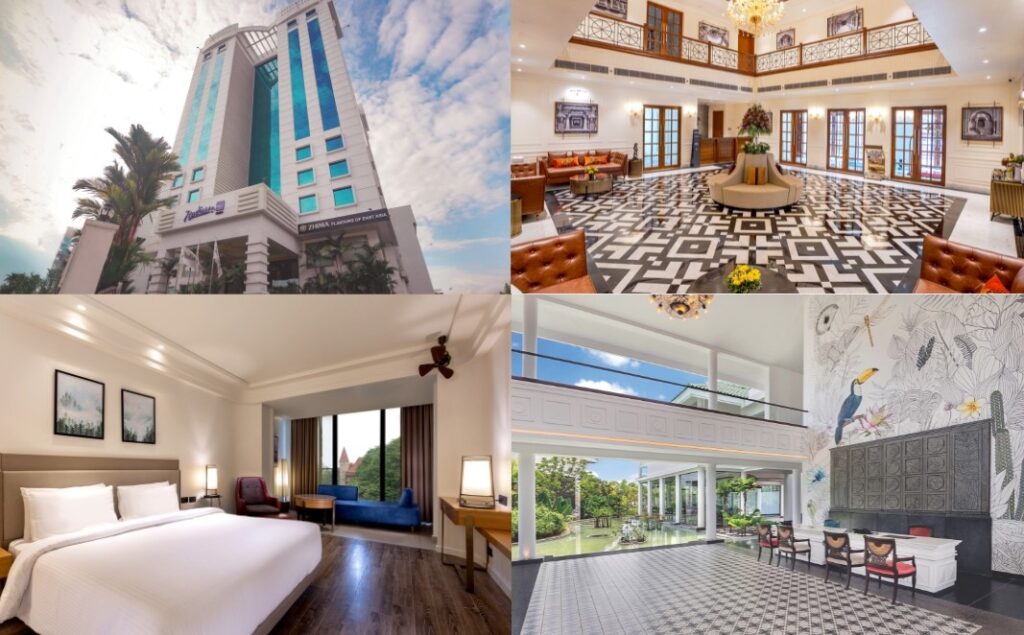
Radisson’s expanding portfolio brings luxury stays to emerging destinations (Photos: Radisson)
On the domestic-international split, Sharma says the recovery is real but still building.
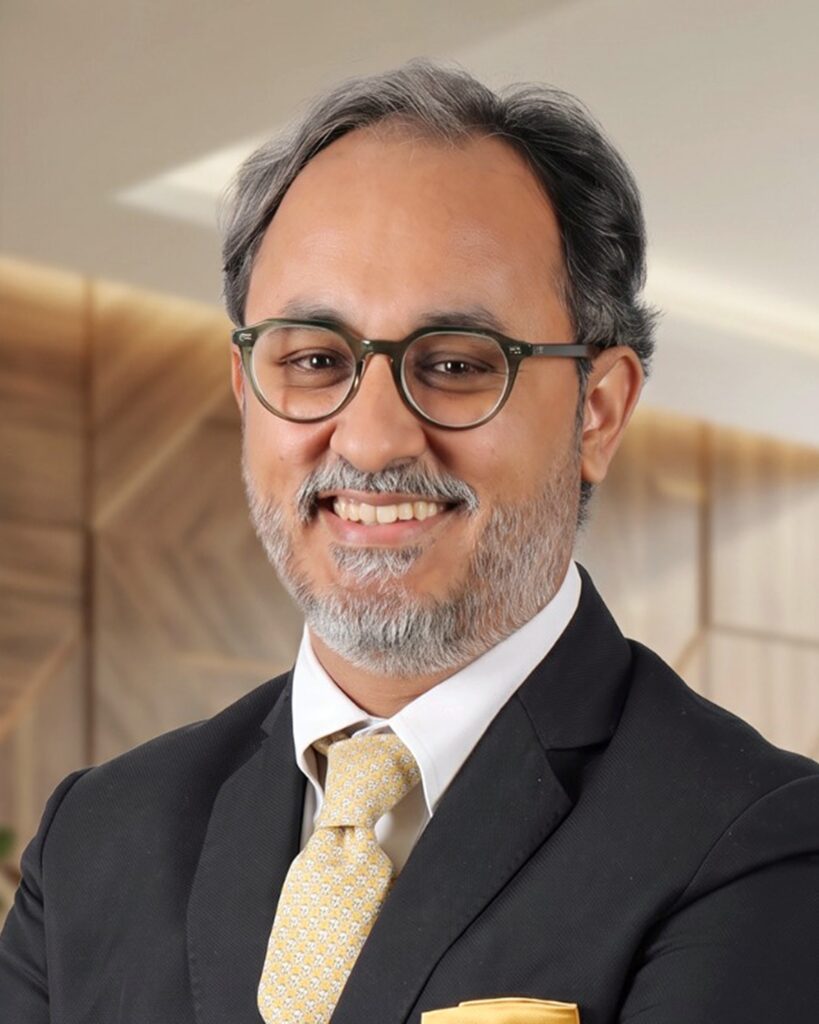
Nikhil Sharma
“Domestic travel continues to be the primary driver of occupancy across our portfolio, supported by India’s growing middle and affluent consumer segments, improved connectivity and increasing frequency of leisure and business travel. International travel has steadily recovered and continues to strengthen, particularly across key gateway cities and destinations with strong leisure, heritage and spiritual appeal. We expect inbound travel to continue growing as India’s global tourism profile strengthens,” says Sharma.
Radisson’s portfolio reflects this wider reach, spanning business hotels, beachfront resorts, hill retreats and leisure properties across destinations including in Kochi, Mamallapuram, Mount Abu, Mussoorie, Sonamarg and Pondicherry.
Luxury hospitality is also drawing a wider domestic audience, with younger travellers, families and first-time luxury guests increasingly willing to pay for the experience. At Karnal in Haryana, Noor Mahal, that is part of American hospitality giant, Marriott International, this shift is expanding the traditional luxury customer base beyond its established clientele.
“Aspirational travellers today are willing to invest in experiences that were once reserved for a few. Luxury is no longer about exclusivity alone; it is about celebrating life’s important moments in extraordinary settings,” Roop Partap Choudhary, Executive Director, tells India & You.
The property’s client list now includes young professionals, entrepreneurs, multigenerational families and first-time luxury travellers, alongside its traditional clientele.
Also Read: Radisson Hotel Group adds 10 hotels in India
The change in who can afford to book, Choudhary says, has not come with the same resistance to higher tariffs seen in the past. “Domestic travel has become one of the strongest drivers of India’s luxury hospitality industry. We are receiving an increasing number of first-time luxury travellers who are confident, well-travelled and highly discerning,” says Choudhary.

Roop Pratap Chaudhary
He says this newer customer is also changing what luxury means. “What distinguishes this new generation is that they value authenticity more than extravagance. They seek destinations that reflect the culture and identity of the place rather than offering a standardised luxury experience,” he says.
For Noor Mahal, this has translated into a broader mix of customers, including young professionals, entrepreneurs, multi-generational families and first-time luxury travellers. The demand is also increasingly occasion-led, with clients choosing luxury stays for weekend breaks, anniversaries, family reunions and celebrations.
“People are travelling more frequently but with greater purpose. Whether it is a weekend retreat, an anniversary, a family reunion or simply taking time away from busy lives, customers are looking for experiences that create lasting memories,” Choudhary says.
He believes the shift is moving luxury away from the traditional emphasis on material extravagance. “A decade ago people invested in luxury products today they invest in luxury memories. That is one of the defining shifts shaping hospitality across India,” he adds.
The change is also reflected in the growing importance of heritage and local character. “Heritage remains one of our greatest strengths, but today’s travellers are not looking to simply admire beautiful architecture they want to experience the culture behind it,” he says. At Noor Mahal, heritage is therefore being combined with dining, art, wellness, celebrations and cultural experiences, giving clients reasons to choose the property beyond its accommodation.
Choudhary also points to the lines between travel categories blurring into what the industry calls ‘bleisure.’ Business travellers now extend their stays with family, leisure travellers often combine celebrations with work or wellness, and even within MICE, he says, organisations are asking for venues that offer culture and dining alongside meeting space, not just conference rooms.
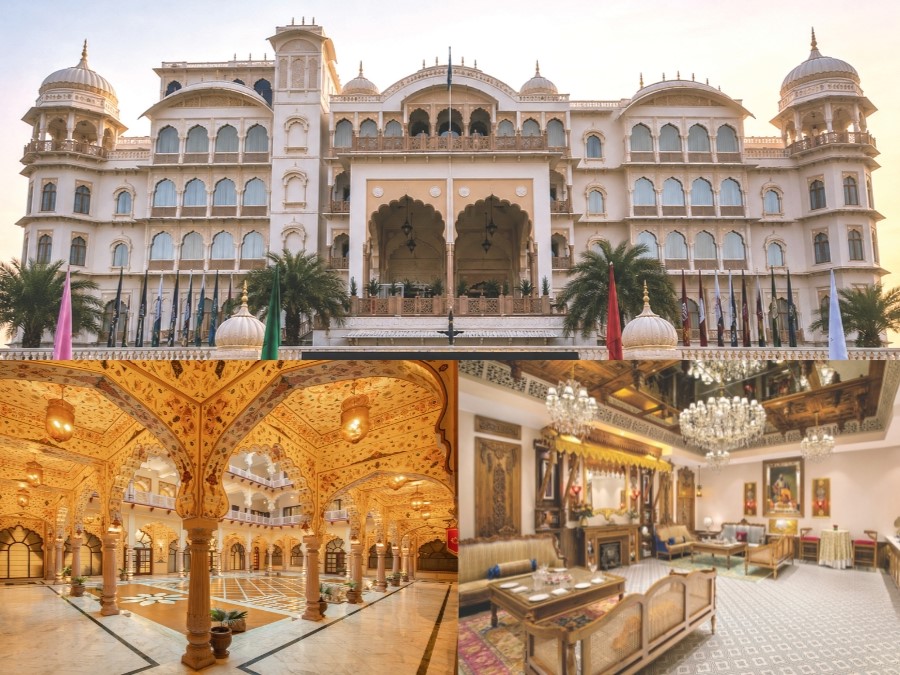
The property is attracting a wider mix of young professionals, families and first-time luxury travellers beyond the traditional affluent clientele (Photos: Noor Mahal)
“I believe the future of luxury hospitality will belong to hotels with a strong sense of identity. Luxury will be measured less by what a hotel possesses and more by how it makes visitors feel,” says Choudhary.
The rise in spending power is also changing luxury demand beyond the major hotel markets and providing a greater mojo to regional hospitality firms, like Swosti Hotels & Resorts, a leading hospitality company based in Odisha.
Jitendra Kumar Mohanty, Chairman and Managing Director, Swosti Hotels & Resorts, says the shift is visible in the growing ability of Indian travellers to pay higher tariffs, travel internationally and spend on luxury weddings and celebrations, bringing luxury hospitality into the mainstream.
“Today, Indians can afford to stay in luxury hotels and pay higher tariffs. With rising incomes and a stronger economy, people are increasingly willing to spend on luxury hospitality. Many Indians are also travelling abroad and staying at luxury hotels. We are seeing the same trend in India, particularly with high-quality luxury weddings. NRIs are coming to India for weddings, while Indian families are also taking their celebrations to destinations abroad. Luxury has therefore become a more accepted standard of travel and celebration,” Mohanty tells India & You.
Higher tariffs are also becoming easier for customers to accept as more Indians have the spending power to pay for premium stays. Mohanty says the customer base now cuts across age groups, with younger travellers, families and even retired persons increasingly travelling and choosing luxury hotels, supported by better connectivity and improved airports.
“Pricing has increased significantly compared with three years ago, but people are now able to afford it and are willing to pay for the experience. We are also seeing a wider age profile among our visitors. The average age is between 25 and 60, but even people above 60, including retired people and families, are travelling more. With travel becoming more accessible through better connectivity and improved airports, more people are willing to spend on hotel stays and experiences,” says Mohanty.
The expansion of luxury hospitality is also moving into smaller cities and emerging destinations, where lower land costs and the growth of eco-tourism are attracting hotel investors. Mohanty says Tier II and Tier III markets are gaining ground, while weddings and luxury leisure are currently driving demand more strongly than MICE.
“Tier II and Tier III cities are growing fast because they offer more land for development, often at lower costs. At the same time, eco-retreats and eco-tourism are gaining popularity. This is encouraging large hotel chains and investors to look beyond established markets and invest in Tier II and Tier III cities and states,” says Mohanty.
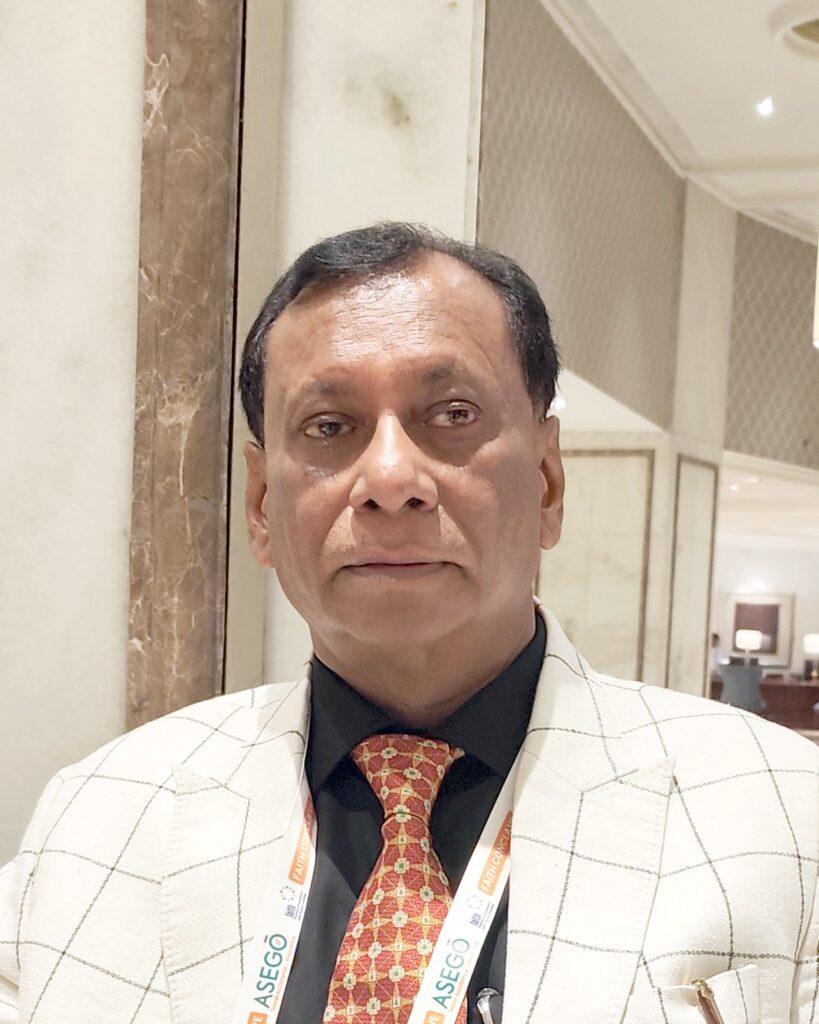
Jitender Kumar Mohanty
While MICE continues to be an important part of the hospitality business, Mohanty says its growth has been affected by geopolitical uncertainty, with the Ukraine-Russia war and Iran-USA tensions slowing business in the segment. In contrast, weddings and luxury tourism are gaining momentum as travellers and families increasingly choose high-end hotels for celebrations and leisure. The shift is adding another layer to the growth of India’s luxury hospitality market, where demand is no longer limited to traditional business or affluent international travellers.
But the hospitality players are aware of the risks of putting all their eggs in the domestic market. Mohanty says that while Indian travellers are spending more on luxury stays and experiences, India needs to attract more high-spending visitors from Europe and the US to strengthen foreign-exchange earnings.
“Domestic tourism is doing very well and growing at a good pace. But what we need is more European and American tourists because we need foreign exchange for the country. Inbound tourism was not doing as well in 2025,” he says.
Mohanty believes one of the challenges is the lack of dedicated tourism promotion in overseas markets. “The Indian tourist offices have been closed and the responsibility for tourism promotion has been given to the embassies. But the embassies do not have the time or trained staff required to promote tourism. That is a grey area,” he says.
He believes India needs to step up international promotion through more campaigns and roadshows to bring in a larger share of high-value international travellers.
The scale of the shift shows up clearly. Industry-wide occupancy was around 43-44 pc in 2021, according to STR/Horwath HTL data cited in hotel company annual reports, recovering to roughly 59.6 pc in 2022 and 63.6 pc in 2023. ARR moved from INR 4,448 in 2021 to INR 6,135 in 2022 and INR 7,479 in 2023. By 2024, nationwide occupancy had reached roughly 63-65 pc, with ARR at INR 7,800-8,000.
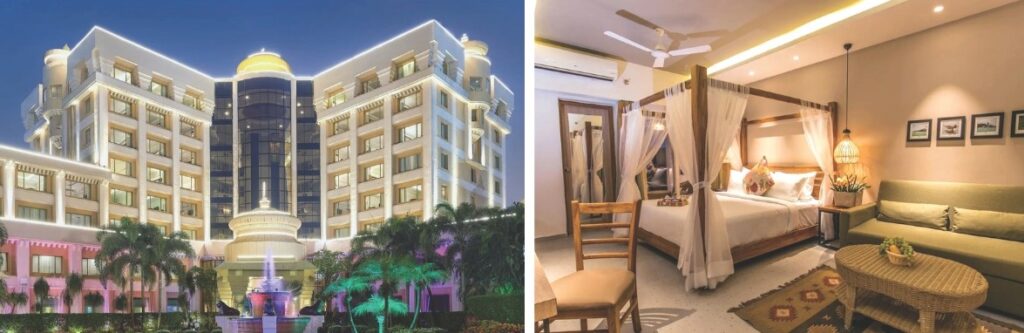
Elegant interiors reflect Swosti’s focus on premium, experience-led stays (Photos: Swosti Hotel & Resort)
The next luxury market
The hotel industry’s expansion is likely to continue, but the nature of that growth is changing. ICRA expects premium hotel demand to grow faster than supply over the medium term. Premium hotel room inventory across 12 key Indian cities is expected to grow by 5–6 pc annually between FY2025 and FY2028, while demand is projected to grow by 8–9 pc.
That creates room for new hotels and higher room rates. But the more important development is happening on the demand side. The Indian travellers who once looked at a luxury hotel and assumed it was not for them is increasingly willing to book it. The decision may still require planning. It may be limited to two nights rather than a week. It may be tied to a birthday, wedding, anniversary or long weekend. But the psychological barrier now is certainly lower.
Luxury is becoming attainable and that is changing the industry’s expansion strategy. Hotels are following consumers into smaller cities. Resorts are being built around emerging destinations. Heritage properties are packaging culture as an experience. Luxury hotels are investing in weddings and celebrations. Technology is being used to personalise the stay. And hotel groups are creating multiple brands to meet consumers at different price points.
The consumer, meanwhile, is becoming more demanding. Once a traveller has stayed at a luxury property, the expectation changes. They begin comparing service, food, design, wellness, technology and experiences across destinations. They may have stayed at a luxury hotel in Dubai, Singapore or Europe and now expect an Indian property to match that level of service while offering something distinctly local.
That is raising the benchmark for Indian hotels. Choudhary believes the hotels that will succeed are those with a clear identity.
“Traveller’s today are no longer searching for places that could exist anywhere in the world. They are looking for destinations that genuinely reflect the culture, heritage and character of where they are visiting,” he says.
Sharma makes a similar point from the perspective of a large international hotel group expanding across India.
“Luxury hospitality today is no longer defined solely by opulence; it is about delivering meaningful, personalised experiences that resonate with modern travellers,” he says.
That may ultimately be the biggest change in India’s luxury hotel market. The industry is adding rooms, brands and destinations, but the more significant shift is taking place among consumers. Luxury is no longer something that only a small group of Indians can access. Many more travellers are choosing when to spend, where to spend and what kind of experience deserves the premium. What has really changed is the number of Indians who now believe they can walk through their doors and more of them are set to keep on coming for the foreseeable future.