India needs China as a partner to combat air pollution
Joint action needed to protect environment in Himalayan region
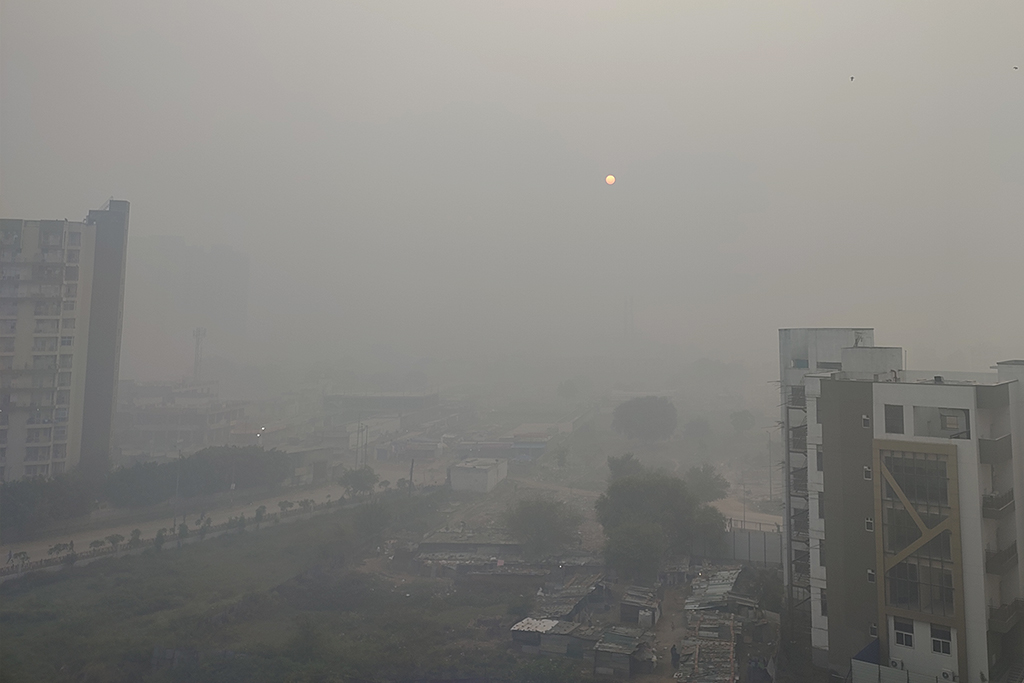
Delhi becomes a city with schools closed, flights disrupted, hospitals overflow and millions inhale air that no human body was designed to endure (MIG Photos/Varsha Singh)
Each winter brings the repetitive and sustained spike in air pollution levels in Delhi and other parts of northern India, that far exceed what a human should be exposed to in a lifetime. India needs to get its act together and certainly take a lesson or two from how China managed the same crisis in its own capital.
Delhi becomes a city with schools closed, flights disrupted, hospitals overflow and millions inhale air that no human body was designed to endure (MIG Photos/Varsha Singh)
As the year 2025 yields to 2026, it signals the start of a key, landmark year which marks the 75th anniversary of diplomatic relations between India and China, a relationship that has seen periods of intense tumult as well as long stretches of time when both neighbours and ancient civilisations have been on tenterhooks, but overall it has been an era defined by the soaring ambitions as well as strategic competition.
However, as we enter the second quarter of the 21st century, both countries are reconciling to the need for working together and building the relationship in the form of a “Dragon-Elephant tango” as wished by President Xi Jinping of China, for his part, Indian Prime Minister Narendra Modi said that India and China are partners, not rivals, and the areas of consensus between the two countries far outweigh the disagreements between them.
The greatest threat to the stability and prosperity of these two giants does not lie in the movement of troops across high-altitude borders. From the Indo-Gangetic Plain to the North China Plain, a common enemy has emerged, the silent, lethal scourge of air pollution accompanied by the existential threat of climate change.
Two nations, similar challenges, different solutions
Today, New Delhi faces a elephantine challenge of cleaning up its air. Beijing similarly faced the ‘dragon’ crisis more than a decade back. Once synonymous with ‘a(ir)pocalypse’, Beijing managed to achieve what is seemingly a miracle with clear, blue skies even during the periods when the pollution is supposed to be at its highest. It has demonstrated that action taken to clean the air is not an inevitable tax on development but investment towards sustainable development. As India and China celebrate 75 years of diplomatic ties, there is no more profound way to honour the Panchasheel principles of 1954 of peaceful co-existence than by forging a “Blue Sky Accord”-a partnership of shared experience to address Delhi crisis.
Delhi air pollution crisis is not only restricted to ‘city crisis’. It is the crisis in Northern India and it is no longer merely an environmental concern. It has become a dark puzzle entangled in life-choices of our developmental imperatives.
In the winter of 2024-2025, particulate matter (PM2.5) levels in the Delhi’s National Capital Region (NCR) reached heights that far exceeded life-limits, resulting in what health experts describe as a ‘permanent health tax’ on the Indian population’s pursuit of modernity.
Each winter, Delhi becomes a city with schools closed, flights disrupted, hospitals overflow, and millions inhale air that no human body was designed to endure. The capital of the world’s largest democracy routinely ranks among the most polluted cities on Earth, with PM2.5 levels soaring to 20-40 times above WHO guidelines. And there are countless unknowns about the long-term impacts to our brains and genes due to polluted air.
The consequences are profound. Beyond the tragic 10,000 to 20,000 premature deaths estimated annually in high-pollution urban centres, there is the invisible erosion of India’s most precious resource, its human-capital. Children in northern India are growing up with reduced lung capacity, the elderly are facing spikes in cardiovascular mortality. Economically, the cost of ‘lost days’ due to school closures, flight cancellations, and medical expenses runs into billions of dollars. Above all it puts in jeopardy the ridiculous target of ‘Viksit Baharat’.
It is a public health emergency, a developmental crisis, and a moral failure. For years, the narrative in India has been one of despair, a sense that the problem of air pollution is too complex, too tied to agriculture due to straw burning, and too dependent on geographical location and too intimately linked to use of fossil fuel and even to weather patterns that cannot be controlled.
Yet moments of crisis can also become moments of transformation. The exceptional story of environmental governance across Himalaya makes astonishing story. That is the story of Beijing.

Delhi becomes a city with schools closed, flights disrupted, hospitals overflow and millions inhale air that no human body was designed to endure
A Chinese blueprint for an Indian problem
Decades ago, Beijing was exactly the same position Delhi finds itself in today. Since 1992 when I joined United Nations Environment Programme ( UNEP) I have witnessed fundamental changes in China’s way to tackle ‘ dragon-challenges’. In 1998, Beijing’s coal-dominated energy structure and a burgeoning vehicle fleet created a ‘combined coal-vehicle pollution’ crisis. At its peak in 2013, the annual average PM2.5 concentration in Beijing was a staggering 89.5 μg/m³.
Yet, as of late 2025, Beijing’s skies are transformed. Recent data indicates that PM2.5 concentrations have dropped to approximately 24.9 μg/m³, a nearly 75 pc reduction in little over a decade. This was not an accident of geography or a result of slower growth. It was the result of the most comprehensive urban air quality management program in human history.
As documented in the 2019 UNEP report, A Review of 20 Years’ Air Pollution Control in Beijing, the Chinese success was built on three indispensable pillars that India can, and must, adopt. First, the power of scientific leadership and implementation . China did not fight a ‘war on pollution’ with generalities and TV debates and political blame game. They fought it with ‘deep-dive’ with leading academic institutions, most notably Tsinghua university, that were empowered to conduct ‘source apportionment’ studies.
They identified exactly what was killing the air, the ‘Big Five’ causes, including emissions from motor vehicles, coal combustion, industrial production, fugitive dust and agriculture waste. India should also immediately and comprehensively engage its own world-beating institutions like the Indian Institutes of Technology (IITs) and the Council for Scientific and Industrial Research (CSIR) in a similar, data-driven partnership in order to bypass years of trial and error.
Source apportionment
By identifying that coal was responsible for 22 pc of pollution and vehicles for 31 pc in 2013, the government could target interventions with surgical precision. Beijing’s approach to mobile sources was revolutionary. They didn’t just ban cars, they rebuilt the ecosystem. The integrated “Vehicle-Fuel-Road” framework focused on three concurrent tracks, namely tightening emission standards, moving from China I to China VI, upgrading fuel quality by removing lead and lowering sulphur content, and optimising the road infrastructure through massive investment in subways and fleets of electric vehicles (EVs) as taxis. By 2023, Beijing’s public bus fleet was 100 pc electric, a feat that New Delhi is currently striving to emulate.
The Chinese government also realised that air did not have any jurisdictional boundaries. The establishment of the ‘Mechanism for Coordinated Prevention and Control of Air Pollution’ in the Beijing-Tianjin-Hebei (BTH) region was a masterstroke. It forced provinces to share data, unify standards, and coordinate emergency responses. This is just what the doctor has ordered for the Indo-Gangetic plain in India, where pollution from one part inevitably affects other.
Action on air-pollution is economically beneficial
Critics of environmental regulation often frame it as a choice between ‘clean air’ and ‘GDP growth’. The Chinese experience shatters this false dichotomy. Beijing’s investment in clean air, exceeding CNY 800 billion (USD 115 billion) over the last decade, was not a cost, it was an investment that has come with a massive return.
The cost-benefit analysis of Beijing’s air pollution control shows a ratio of 1:3.5. For USD 1 spent on technological upgrades and coal-to-gas conversion, the society gained USD 3.5 in return. These returns came in the form of 7.7 million new green jobs, a CNY 3 trillion boost to GDP through the development of the environmental protection industry, and a massive reduction in the national health bill.
For India, a nation with big aspirations, air pollution is a hugely expensive efficiency tax. By cooperating with China to adopt ‘leapfrog’ technologies in green energy and EV infrastructure, India can accelerate its growth while protecting its people.
How India-China can shape environmental diplomacy
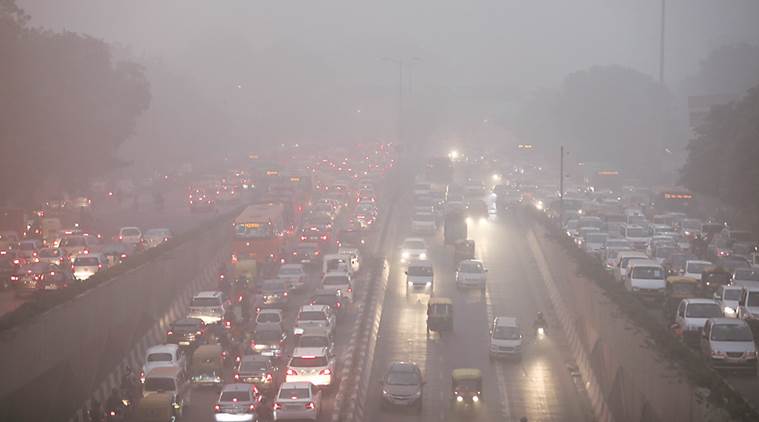
For India, a nation with big aspirations, air pollution is a hugely expensive efficiency tax
The 75th anniversary of India-China relations provides a unique diplomatic ‘thaw’ opportunity. In a world characterised by strategic competition, climate change and air pollution represent a ‘common enemy’. This is a space where the interests of New Delhi and Beijing are perfectly aligned.
Also, environmental cooperation is a classic ‘low-politics’ entry point that can build the trust necessary for other more challenging issues. By focussing on shared technical challenges such as the management of agricultural residue or the creation of high-density sensor networks both nations can engage in a dialogue that is constructive, non-threatening, and mutually beneficial.
Second, the Himalayan region is the ‘Third Pole’ of our planet. The black carbon and pollutants rising from Northern India and Southern China are accelerating the melting of Himalayan glaciers, threatening the water security of over a billion people. Cooperation on air pollution is, therefore, an act of ‘Himalayan Stewardship’. By joining hands, the two giants can demonstrate to the world that they are responsible global powers capable of protecting a global commons.
As the leading voices of the Global South, India and China have a unique opportunity to create a ‘South-South Cooperation’ model for environmental governance. If the two largest developing nations can solve the most difficult air pollution crisis in history through shared experience, they will provide a template for every emerging megacity from Lagos to Jakarta.
To commemorate this 75th anniversary, India and China should strategise Panchsheel Principles of 21st century. As a first step, India-China Clean-Air University Centres can be created through a partnership between the Chinese Tsinghua University and the Indian IITs. Second, a technology-sharing agreement to accelerate India’s transition to clean energy , electric public transport, leveraging China’s experience in building the world’s largest EV ecosystem. Third, set up a Himalayan Air Quality Monitoring Network, fourth, a Green agenda for BRICS and finally, a bilateral climate dialogue.
The Dragon-Elephant tango has often been described as a dance of competition. But as we enter 2026, it is time for a new choreography. The 21st century belongs to Asia. Let us ensure that the people of Asia have the air they need to live through it. India and China on the 75th anniversary of their diplomatic ties, must use diplomacy for the gfreater good of the population of both the nations, by moving beyond the strategic divide and looking towards the sky and creating a legacy of sustainable development through environmental diplomacy.