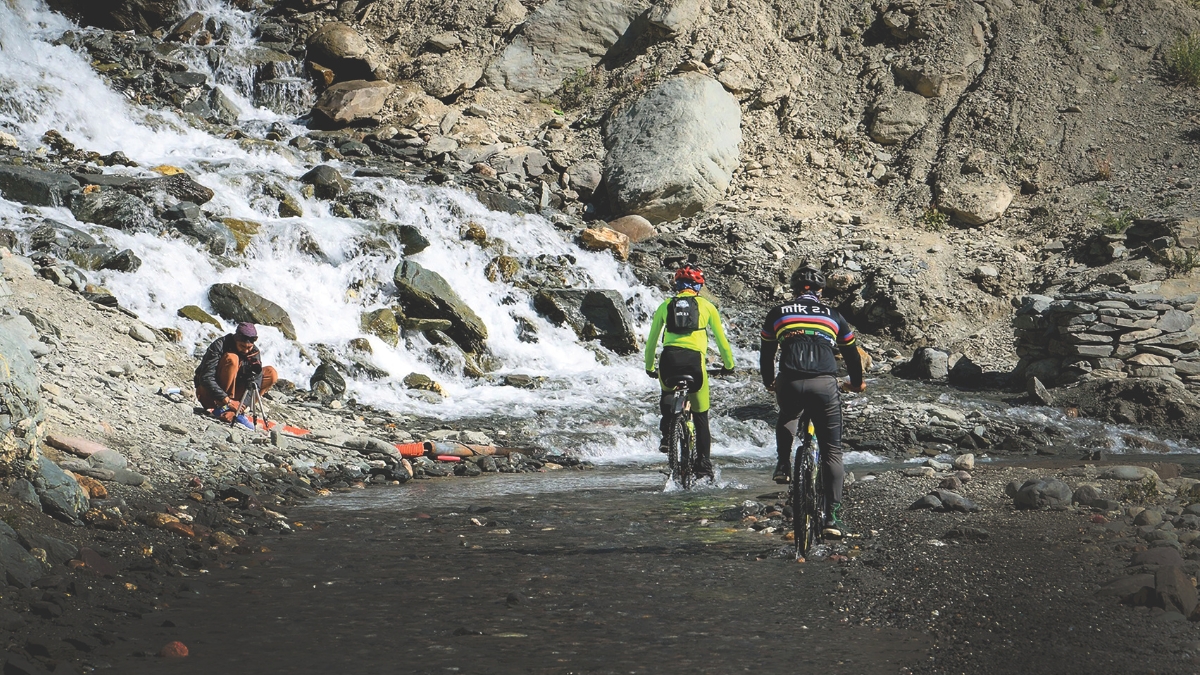
Cycle tourism in India offers an immersive way to experience the country’s diverse landscapes, vibrant village life, and ancient heritage at a slower, more intimate pace (Photo: Cycle Adventure)
Traditionally, bicycle tourism in India has occupied a niche space, often overshadowed by conventional sightseeing formats dominated by buses, cars and tightly packed itineraries. In recent years, however, this segment has begun to register steady growth, driven by changing traveller preferences, postpandemic shifts in mobility and a growing interest in slower, more immersive forms of travel. From urban heritage rides to long-distance rural routes, cycling is increasingly being viewed not merely as a recreational activity, but as a legitimate way of engaging with destinations across the country.
From the heritage lanes of Delhi to the deserts of Rajasthan and the backroads of Kerala, more travellers are choosing bicycles as a way to engage deeply with landscapes, cultures and communities. Operators say that the shift has been gradual but unmistakable, shaped by changing travel mindsets, post-pandemic priorities and a growing appetite for meaningful, low-impact experiences.
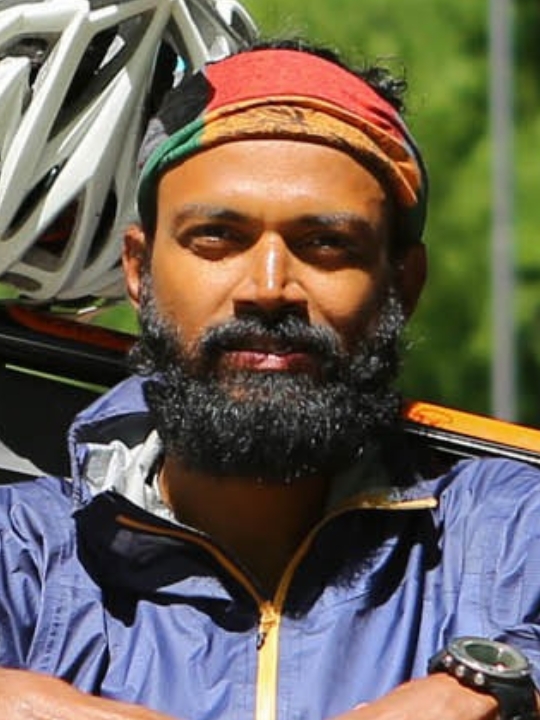
Sabir Mallick
For Sabir Mallick, Founder of Cycling in India, a Delhi-based tour operator specialising in organising bicycle tours, the rise in demand is visible in simple numbers.
“Before Covid-19, I used to have around 50 clients in a year. Now I have more than 150. I can easily say there has been a 200 to 300 pc increase in bicycling as a mode of tourism,” Mallick tells India & You.
Mallick says he works almost exclusively with international travellers, guiding them through long-distance cycling routes in Rajasthan, Kerala, Goa and the Himalayas.
His entry into cycle tourism was almost accidental. In the mid-2000s, after meeting a friend in the tourism industry, he noticed foreign companies are selling cycling tours in India.
Also Read: Unique cycle rally to rebuild bridges with Bangladesh
“I thought, why not? Why should not Indian companies do this,” he adds.
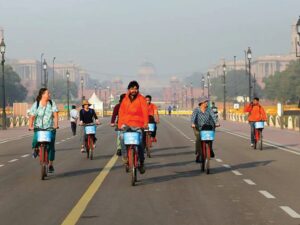
Photo: Delhi by Cycle
He started Cycling in India in 2008. In the early years, business was painfully slow. “In the beginning, we used to have just two or four clients in a whole year,” he recalls. To survive the company he ran other kinds of tours alongside cycling. It took more than a decade for the idea to stabilise. Today, Mallick runs only bicycle tours.
What bicycle tourism does support, he adds, is local economy through small hotels, roadside eateries, mechanics and guides along lesser-known routes.
If Mallick represents long-distance, international-facing cycle tourism, Delhi By Cycle tells a very different, urban story. Founded in 2009, the organisation was among the first to imagine cycling as a way to understand an Indian city rather than escape it.

Himadri Giri
“The idea came from a simple realisation that Delhi is best understood not from inside a car, but from its streets, at a human pace,” Himadri Giri, Director, Delhi By Cycle tells India & You. When the organisation began, cycling in Delhi was associated almost entirely with necessity, not choice.
“Cycling was not seen as a tourism activity at all,” Giri says. Inspired partly by the Dutch bicycling culture, the aim was to change that perception.
“We wanted people to engage with Delhi’s history, neighbourhoods, and everyday life without distancing themselves from it,” Giri adds.
In its early years, Delhi By Cycle catered mostly to international travellers. That changed dramatically during and after the Covid-19 pandemic.
“We noticed a significant shift. Domestic travellers and even city locals began joining our weekend bicycle tours, especially under our Public Mobility initiative,” says Giri.
Also Read: Adventure Tourism in India
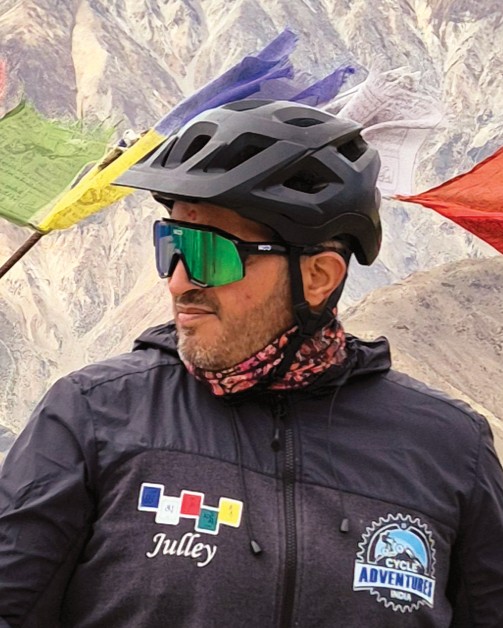
Rohann Singh Kalra
If urban cycling tours reveal how bicycles are reshaping the way cities are experienced, adventure-focussed operators point to an equally strong shift in how travellers are approaching long-distance journeys. For Rohann Singh Kalra, Founder of Cycle Adventures India, based in Chandigarh the growth of bicycle tourism has been unmistakable, particularly in the years following the Covid-19 lockdowns.
“Post-lockdown, the industry has seen a massive boom. Bicycle tourism is mushrooming now. People want to explore destinations inside out, and they want to do it differently,” Kalra tells India & You.
What stands out, he adds, is the age profile of these travellers. Contrary to the perception that cycling expeditions cater primarily to younger audiences, most of his clients are over 40. “Our maximum number of tourists fall in the 40–45 age bracket and we have had riders up to 70 or even 78 years old,” he adds.
The demand, Kalra explains, comes largely from domestic travellers, though international interest remains steady. “Around 70 pc of our clients are Indian and about 30 pc are international,” he says.
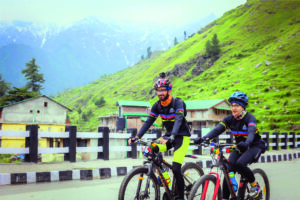
Photo: Cycle Adventures India
According to him, health consciousness has emerged as a major driver behind this shift. “After the lockdown, people became more inclined towards fitness. Cycling offers them a way to stay healthy while also travelling and experiencing places at a much deeper level,” says Kalra.
Cycle Adventures India organises routes that range from high-altitude Himalayan expeditions to desert and coastal trails. Its most popular tours include Manali–Leh via Khardung La, Srinagar–Leh, Jaipur to Udaipur, desert circuits through Jaipur, Jodhpur and Jaisalmer, Mumbai to Goa, and cycling routes across Gujarat’s Kutch region, covering Bhuj and surrounding areas. “People find cycling to be a more convenient and immersive way of travel compared to cars or buses. The experience is completely different,” he adds.
Kalra, who has been a cyclist since 2009, says the idea for the company emerged after repeatedly encountering foreign cyclists on Indian routes, particularly in the Himalayas. “Around 2015, we met many international riders cycling from Manali to Leh. That was a turning point. We thought if they can do it, why should not we promote the same kind of journeys for Indian travellers,” says Kalra.
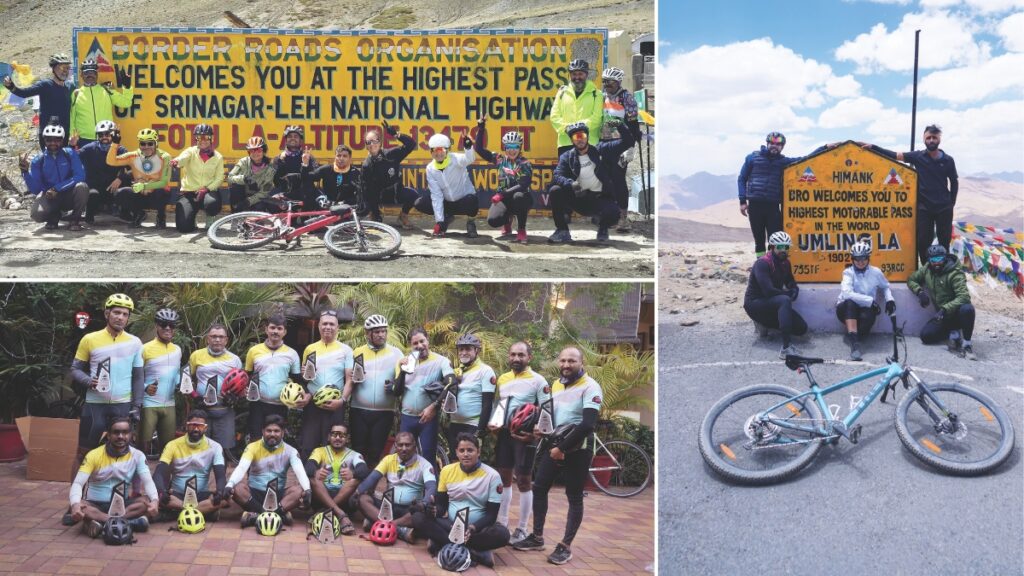
Leh cycling tours offer thrilling trans-Himalayan adventures, ranging from single-day monastery acclimatization loops to grueling multi-day expeditions. (Photos: Rohann Singh Kalra)
Founded in 2018 with operations across India, Cycle Adventures India positions itself not just as a travel company but as an environmentally driven initiative. “Our core mission is emission reduction. You explore the same destinations, the same landscapes, but on cycle. It is healthier, cleaner and far more connected to the environment,” he adds.
Yet the reasons driving the growth of bicycle tourism go beyond fitness or novelty alone. There is also a growing awareness of cycling’s emotional and mental benefits, particularly its ability to foster deeper connections with places and people. Giri points to research that supports this shift in perception. A study led by Yingling Fan from the Humphrey School of Public Affairs found that people who commute by bicycle report significantly higher levels of happiness compared to those who rely on cars or public transport.
Also Read: Women bikers on road to freedom
“While fitness is often the initial motivation for many participants, over time they begin to value cycling for very different reasons. It becomes a way to connect more deeply with the city its culture, its people and its stories. When you cycle, you notice things you would otherwise miss,” says Giri.
Delhi By Cycle’s routes are deliberately designed to avoid postcardstyle sightseeing. Tours begin early to escape traffic and focus on street-level experiences. One of the most popular routes runs through Old Delhi, starting from Daryaganj. “Cyclists are drawn to Old Delhi because it offers layers of history, food culture, markets and everyday life. Riding through narrow lanes when the city is waking up creates an intimacy you simply can not get otherwise,” says Giri.
Other routes move through South Delhi, connecting Humayun’s Tomb, Nizamuddin Basti, Sufi shrines, Lodhi Garden, and the Lodhi Art District. These areas appeal to both tourists and locals for their mix of green spaces, heritage and relatively calmer roads.
“What makes these routes popular is not just their layout. It is the experience of slowing down engaging through sounds, smells, conversations and stories,” Giri adds.
Despite its alignment with sustainability, bicycle tourism in India is far from easy to run. “People think it is simple just give bicycles and ride. In reality, there is no ecosystem to support this. There are no dedicated public spaces for cycle storage or maintenance, forcing operators to manage multiple small facilities close to each route. Every cycle requires daily safety checks, repairs and logistical planning,” says Giri.
Infrastructure gaps make operations even more complex. With limited bicycle lanes and unpredictable traffic conditions, routes must be constantly reassessed.
“This demands deep local knowledge and daily oversight,” Giri explains, unlike conventional bus or car tours that rely on fixed systems. Weather, road closures, or public events can disrupt plans overnight.
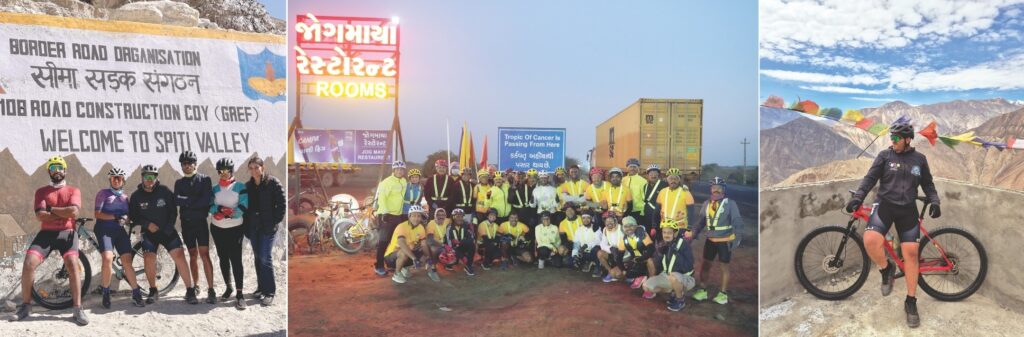
Cycling to mountains is a once-in-a-lifetime experience (Photos: Rohann Singh Kalra)
These challenges explain why bicycle tourism in India remains driven by a handful of committed organisations rather than large commercial players. “It requires patience and long-term belief. Returns are not fast, and the work is invisible,” Giri adds.
This sense of presence and engagement, operators say, is what ultimately sets bicycle tourism apart from more conventional forms of travel, helping explain why the segment continues to find new audiences across age groups and geographies in India.
As it gradually expands beyond organised operators and guided expeditions, a growing number of grassroots collectives and independent riders are also shaping the movement. One such organisation is Cycle Away, co-founded by Pawan Kaul, whose journey into cycle touring began in 2018 as a shared passion among a group of four friends. What started as an experimental long-distance ride soon evolved into repeated expeditions across the country, with cycles becoming their preferred way to travel slowly, connect with local communities and embrace the unpredictability of the road.
Also Read: Spiti valley: adventure alongside snow-crowned mountains
“Cycling is slower than travelling by car or motorcycle, but that is exactly what helps you connect much better with people and your surroundings. You experience a place far more deeply on a cycle, and people connect with you more easily because they see you as one of them,” Kaul tells India & You.
He describes bicycle touring as an adventure shaped by constant unpredictability. “There are more variables and surprises along the way, and that is what makes cycling special,” Kaul adds.
Cycle Away has covered routes including Pune to Goa via the Konkan coast, Goa to Kanyakumari, Chennai to Rameswaram in Tamil Nadu, stretches across Odisha and Bengaluru to Coorg in Karnataka.
While interest is growing, Kaul acknowledges that bicycle touring remains a niche pursuit in India. “It demands a lot more effort, and that is something many people still try to avoid. But as people learn more about it, they might be willing to give it a try,” he adds.
He also points to a visible rise in independent riders. “We are seeing many solo cyclists from smaller towns attempting all-India cycling trips, which shows the mindset is slowly changing,” Kaul adds.