
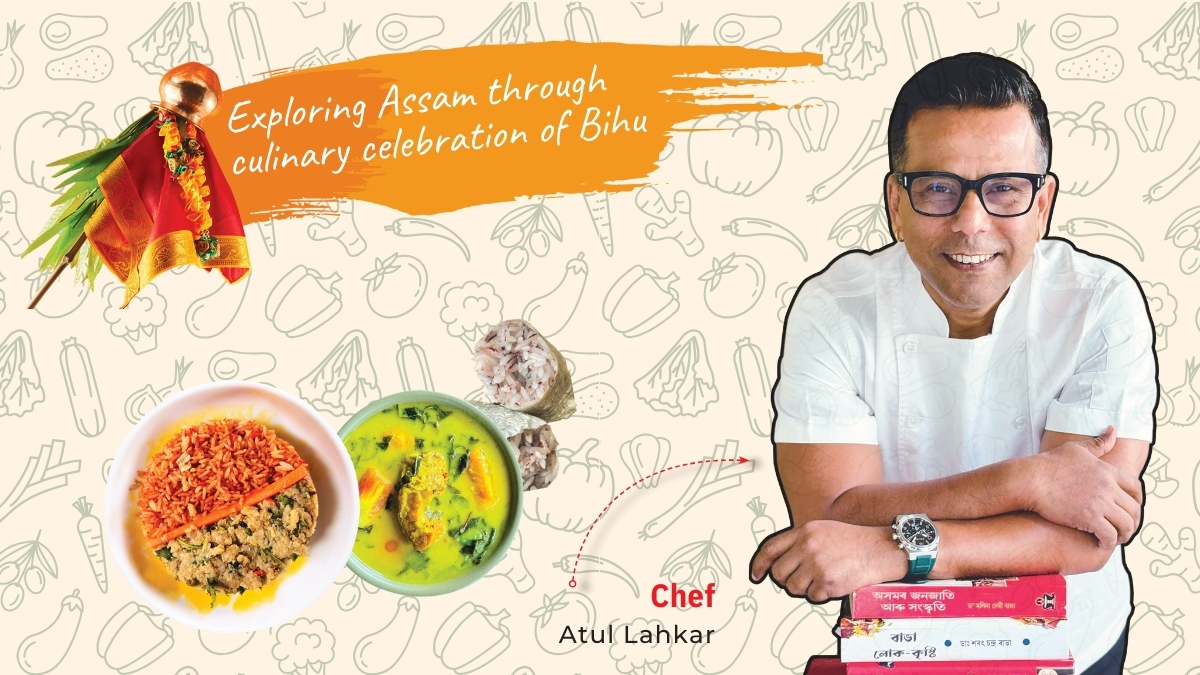
The Assamese New Year and the start of spring are commemorated in April with Rongali Bihu
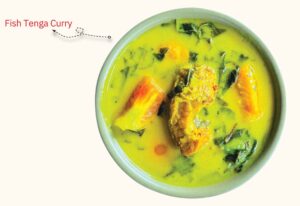
Fish Tenga Curry
In the northeastern state of Assam, the colorful festival of Bihu is much more than just a festive celebration, it is a reflection of the state’s agricultural heritage, cultural diversity and gastronomic legacy. Celebrated three times a year, Bihu symbolises the balance of nature, community, and tradition while also marking significant turning points in the agricultural calendar.
Celebrated in January, Bhogali Bihu marks the conclusion of the harvest season with feasts and get-togethers with the community. Families prepare elaborate meals in makeshift bamboo huts called Bhelaghor on the eve of Magh Bihu, also known as Uruka. Following traditional games like egg and buffalo fights, the following day starts with offerings to a bonfire or Meji.
Also Read: India’s Culinary Gems Miss the Michlein Spotlight
The Assamese New Year and the start of spring are commemorated in April with Rongali Bihu. It is a period of romance, happiness, and rebirth. Goru Bihu, the festival’s opening ritual, involves farmers bathing and applying turmeric paste to their cattle as a sign of respect.
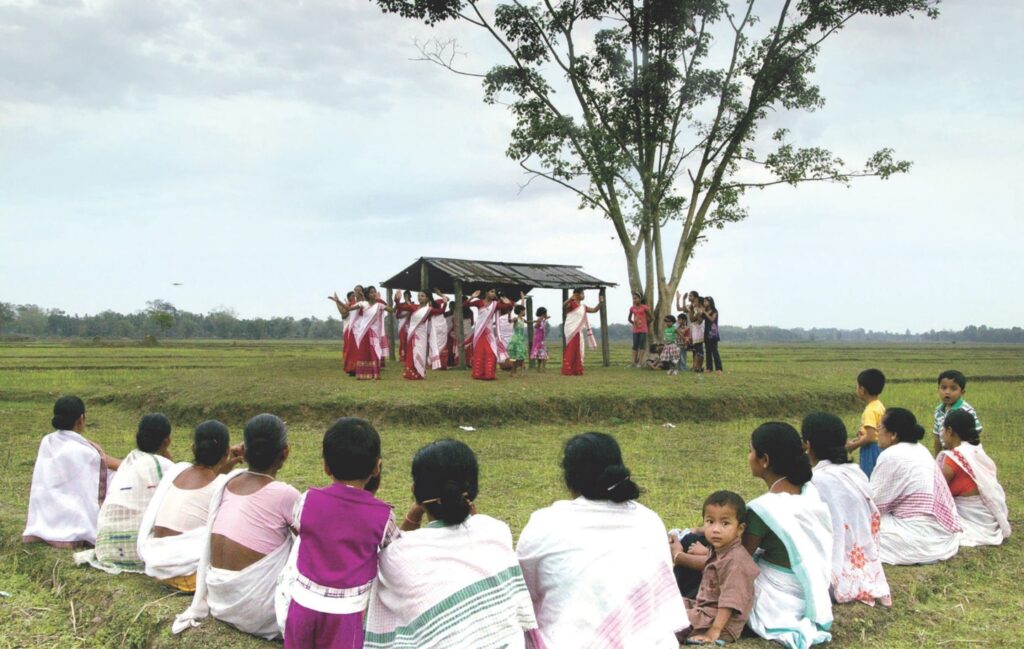
Bhogali Bihu marks the conclusion of the harvest season with feasts and get-togethers with the community
The more sombre celebration of Kongali Bihu, which takes place in October or November, symbolizes the pre-harvest period of scarcity. In paddy fields, lamps are lit as a sign of hope amid austerity and to pray for a bountiful harvest. This type of Bihu reminds people of the difficulties farmers face and how resilient they are in overcoming them.
All three types of Bihu revolve around food, but Bhogali Bihu, which means feasting, is especially important.

Til Pitha
“As a chef, I believe that food is not just sustenance; it is a memory, medicine, and the rhythm of life itself. Assamese cuisine, particularly during Bihu, is a reflection of nature’s cycle, deeply rooted in the land and the changing seasons. When spring awakens and Bohag Bihu arrives, we celebrate with food that nourishes both the body and the spirit. Our cuisine is shaped by the wisdom of our ancestors, simple yet profound, humble yet extraordinary. We cook with wild aromatic herbs, medicinal plants and fresh spices, each ingredient chosen not just for taste but for its healing touch. Our culinary techniques are as diverse as our landscape: boiling, steaming, smoking, fermenting, and bamboo cooking, each preserving the essence of the ingredients, ensuring that every bite carries the soul of Assam,” Chef Atul Lahkar, a reputed Assamese chef, tells India & You.
“For the past 30 years, I have been passionately promoting my culinary heritage, bringing Assamese cuisine to the global stage. Some of our dishes meet international gastronomic standards, such as Masor Tenga, a tangy fish curry, and Khar, an alkaline delicacy, which have been cooked and appreciated by renowned chefs like Gordon Ramsay, Vikas Khanna, Ranveer Brar and many more from across the world,” Lahkar adds.
Traditional Assamese Bihu feasts would be incomplete without pithas, rice based treats that take many different forms. For example, Narikol Pitha is filled with sweetened grated coconut, and Til Pitha is made of cylindrical rice cakes filled with black sesame seeds and jaggery.
Also Read: From Kashmir to Tamil Nadu: 5 hidden culinary gems of India
Another popular dish among people is Sunga Pitha, which has a distinct smoky aroma from cooking sticky rice inside bamboo tubes over an open flame.
“In Assam, rice is more than just staple food, it is a symbol of identity, tradition, and ritual that supports us during significant life events. Rice is a reliable companion that reflects our long-standing customs, from birth ceremonies to harvest festivals. Some, like Kumal Saul, can be eaten raw, while others, like Pitha and Laddus, become delicious cakes and sweets. During Bahag Bihu, rice takes center stage in Jolpan, an Assamese breakfast consisting of a well-balanced mixture of rice, curd, cream and jaggery that represents prosperity and plenty. The culinary traditions of our neighbours in north-east India and our own traditions blend together, celebrating the abundance of nature with similar flavours. The knowledge of our forefathers leads us as we assemble for Bihu feasts,” says Lahkar.
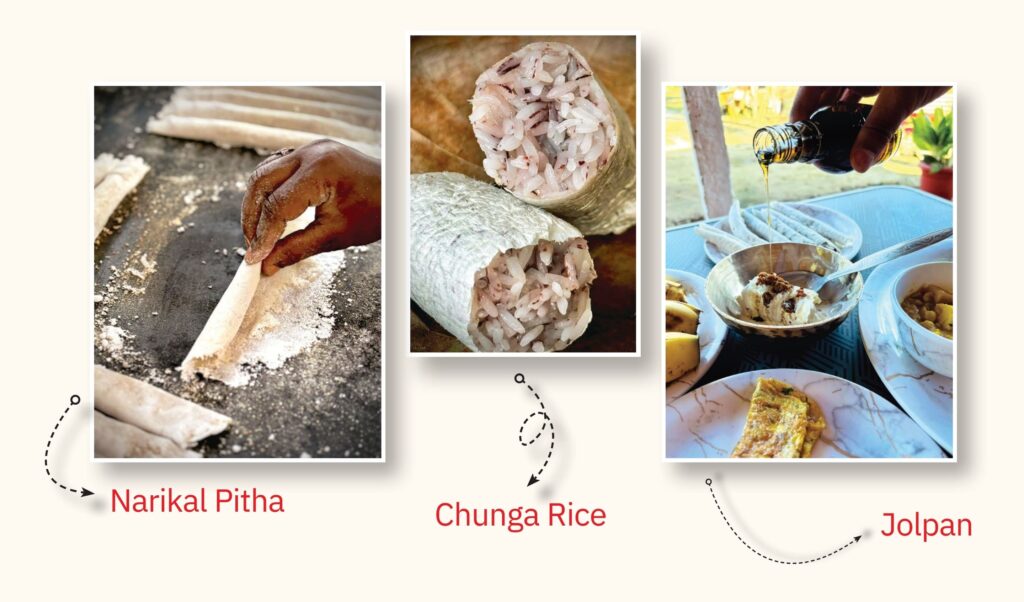
Traditional Assamese Bihu feasts would be incomplete without pithas, rice based treats that take many different forms
Simple ingredients like coconut, Narikolor Laru, puffed rice, Murir Laru, or sesame seeds, Til Laru, are used to make laddus, which are sweet balls held together with sugar or jaggery.
Another traditional Assamese dish is khar, which is made with raw papaya and alkali that is taken from burnt banana stems. It draws attention to the area’s distinctive culinary customs and acts as a palate cleanser during hearty feasts. On the other hand, pork dishes are common in some communities, while freshwater fish like Rohu or Hilsa are frequently prepared with mustard seeds or bamboo shoots.
Lahkar says that each festival, each dish, and each bite tells a story of the land, of the people, and of the love that binds the cultural roots. “As a chef, I see these dishes not just as recipes but as bridges between generations, as whispers from our ancestors urging us to remember, to preserve and to celebrate the flavours of our heritage,” says Lahkar.
Assamese cuisine across the country in modern times
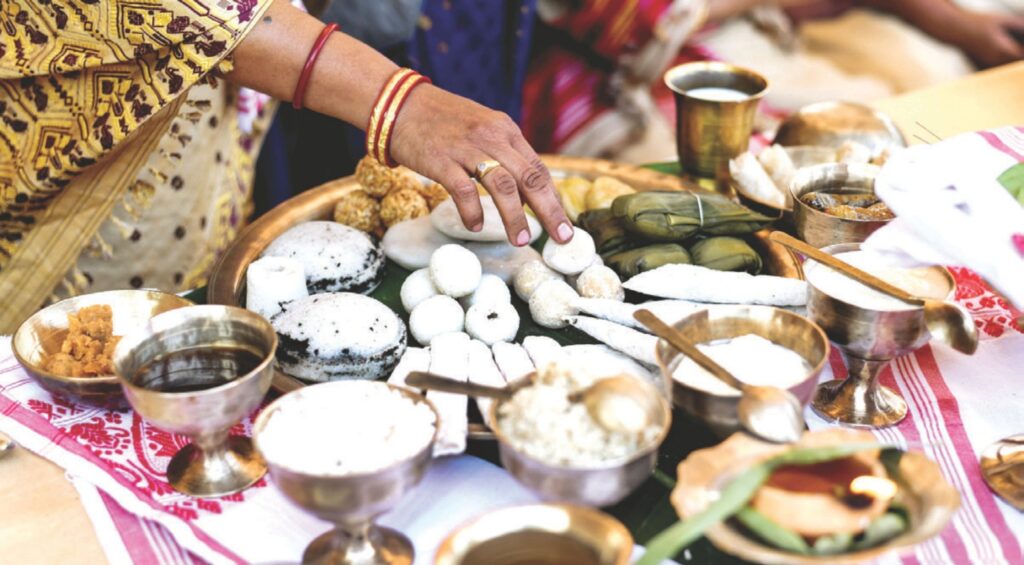
During Bahag Bihu, rice takes center stage in Jolpan, an Assamese breakfast consisting of a well-balanced mixture of rice, curd, cream and jaggery
Modern variations have appeared to accommodate shifting tastes, even though traditional dishes continue to be the focal point of Bihu celebrations. Fusion desserts, such as Til Pitha ice cream, for example, blend regional flavours with modern methods. Urban restaurants now serve carefully chosen Bihu menus that introduce local specialities to a broader clientele.
Also Read: Culinary tourism: Exploring India’s enormous treasure trove
Younger generations are encouraged to learn traditional recipes and add their own unique touch to classic dishes through cooking competitions held during community gatherings. The essence of Assamese cuisine will endure as it changes over time thanks to this blending of innovation and tradition and chefs like Lahkar, who continue to document the links between modernism and the rich diversity of Indian gastronomy and take the legacy forward locally as well as globally.
“Over the years, I have discovered fascinating culinary parallels between Assamese cuisine and various regional cuisines across India. Some of our traditional dishes share similarities with those of the Kadava community from Coorg in Karnataka, particularly in their use of smoked and fermented ingredients, as well as indigenous cooking techniques. Similarly, Assamese cuisine has deep-rooted connections with Bengali, Malayalee and Odia cuisines. Our use of mustard seeds, fermented ingredients, and freshwater fish preparations aligns closely with Bengali culinary traditions. The influence of Kerala can be seen in our coconut-based dishes and aromatic spice blends, while Odia cuisine shares common elements with Assamese food, particularly in its simple yet flavourful fish and vegetablebased recipes.These connections highlight the rich diversity of Indian gastronomy, where food traditions transcend geographical boundaries, weaving a shared culinary heritage,” Lahkar adds
