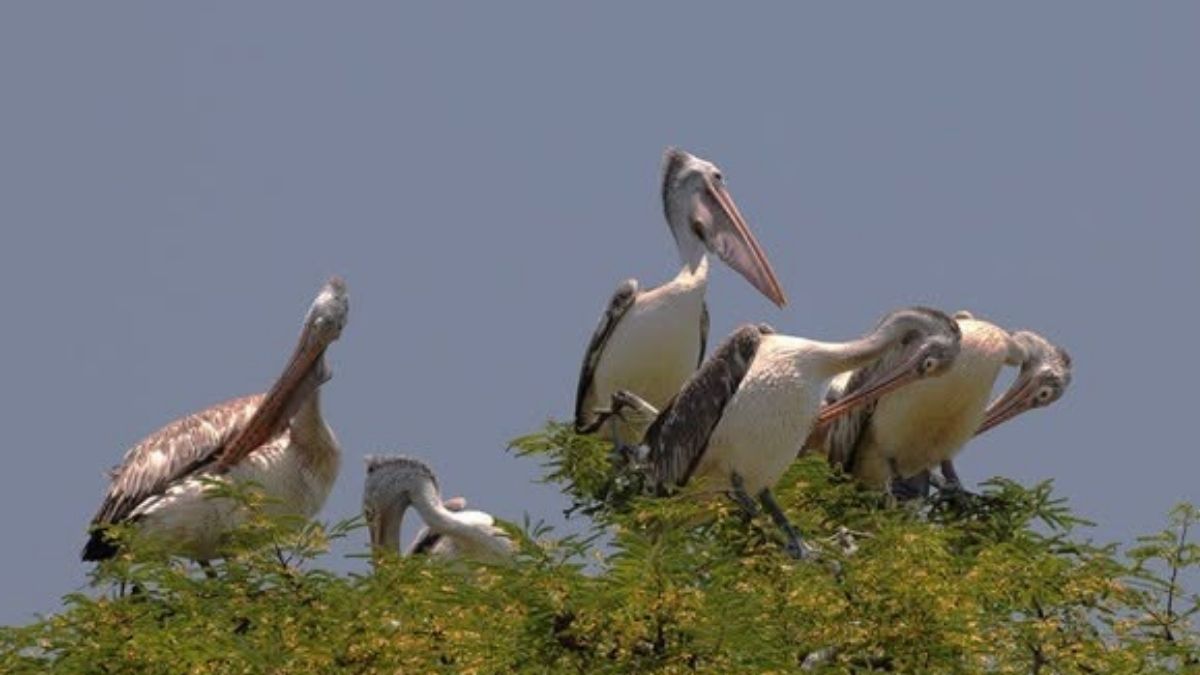
Every year thousands of migratory birds cross continents, oceans and skies to reach India (Photo: Rajasthan Tourism)
Few villages in India have spent years protecting birds that nest in their trees and feed in their fields, or arrive every winter from thousands of kilometres away. Nobody built a resort around them or launched a tourism campaign. The travellers came on their own birders, photographers, researchers and increasingly ordinary tourists who have heard about a village in the Thar Desert where tens of thousands of cranes land each winter, or a hamlet in Karnataka where pelicans nest above people’s front doors. These places were not designed as destinations. They became ones.
Three of them stand out for the scale of what has been built and for how differently each came about.
Kheechan, Rajasthan
Kheechan village lies in Phalodi district, over 140 km northwest of Jodhpur, on the edge of the Thar Desert. In the 1970s, a man named Ratanlal Maloo began scattering grain for birds near his home, as his family had done before him. One September, around 70 to 80 Demoiselle cranes appeared near the village salt pans. He fed them too. The following season, more came. Other villagers contributed grain. Over the following decades, the numbers kept climbing.
Also Read: Migratory birds in Delhi this winter
The village now receives between 20,000 and 30,000 Demoiselle cranes every winter. The birds breed in Central Asia across Mongolia, the Caucasus and the Russian steppes and cover close to 5,000 km in roughly two weeks, flying across several international borders and over the Himalaya before landing in the desert. At the height of the season, up to 3,000 kg of grain are consumed at the village feeding station every day.
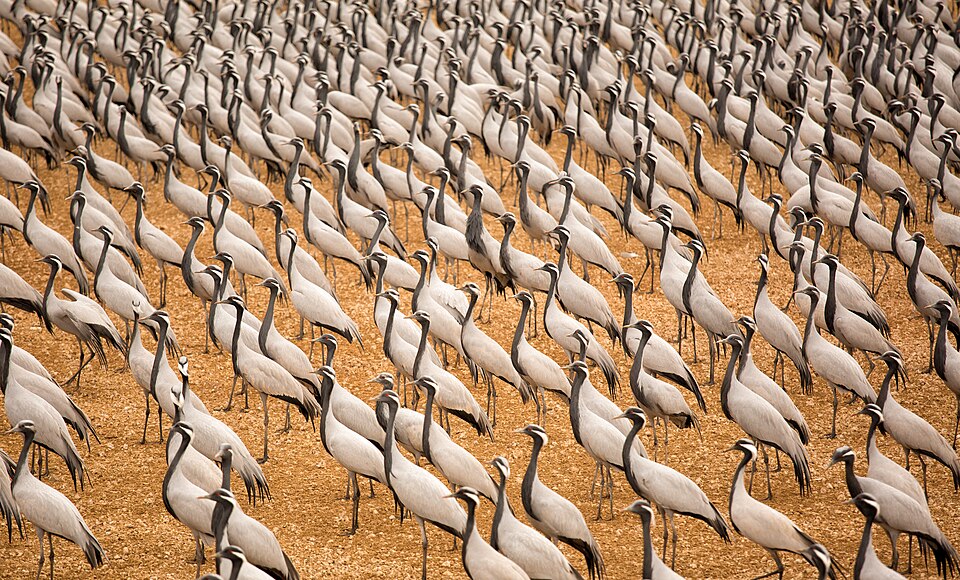
Kheechan now receives between 20,000 and 30,000 Demoiselle cranes every winter
The Jain Maheshwari community that populates Kheechan holds a religious belief against harming animals, but the practical work of feeding and protecting the cranes has been organised and funded by the community itself over five decades. In April 2023, the Rajasthan Forest Department notified the area as India’s first conservation reserve dedicated to the Demoiselle crane. The adjacent wetland was designated a Ramsar site in 2024. The bird has become inseparable from the village’s identity families name their children kurja, the Rajasthani word for the crane, and its image appears in local songs.
Birdwatchers and photographers now travel to Kheechan from across India and from abroad. Homestays have grown around this demand in the village and in nearby Phalodi town.
Kokrebellur, Karnataka
Kokrebellur is in Mandya district, about 90 km southwest of Bengaluru, a short detour off the Bangalore-Mysore highway. The name itself comes from kokkare, the Kannada word for painted stork. According to local accounts, the storks and pelicans have been coming here to breed for centuries. When a plague in 1916 forced the villagers to leave their settlement by the Shimsha river and move a few km away, the birds followed them and continued nesting in the trees of the new location.
Also Read: World’s first Angry Birds entertainment park in Qatar
Each season, around 500 spot-billed pelicans and 2,000 painted storks migrate to the village to nest. Both species are listed as near-threatened on the IUCN Red List, and Kokrebellur is one of only 21 breeding sites for the spot-billed pelican across India. The birds do not nest in any demarcated reserve. They nest inside the village in the tamarind trees that line its lanes, above houses, in the middle of daily life. The village has fewer than 1,500 people and no barriers between residents and birds.
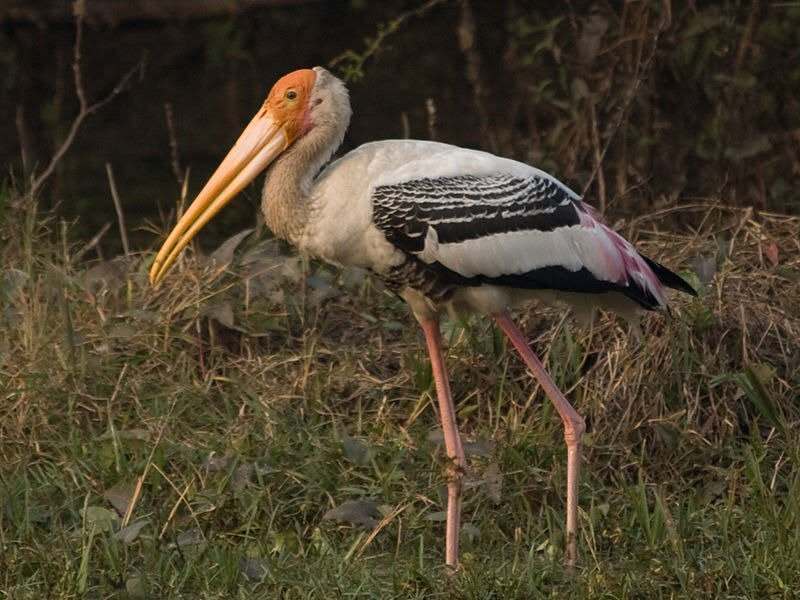
Each season, around 500 spot-billed pelicans and 2,000 painted storks migrate to the village to nest
The relationship has historically been practical as well as habitual. Villagers used the bird droppings, which are rich in nitrogen and phosphate, as agricultural manure, collecting it from pits dug beneath nesting trees and mixing it with silt from nearby lakes. Kokrebellur was declared a community reserve in 2017 under the Wildlife Protection Act. Birders, researchers and wildlife tourists now visit through the winter months, from November to March.
Kamrup, Assam
The greater adjutant stork known locally as hargila, meaning ‘bone swallower’ in Assamese was long considered an unwelcome presence in the villages of Kamrup district. By 2007, its population in Assam had fallen to fewer than 450 individuals. Its remaining nesting colonies were concentrated in a few villages, including Dadara, Pachariya, and Singimari and nesting trees were being cut regularly.
Wildlife biologist Purnima Devi Barman began working in those villages in 2007. She focussed not on enforcement but on changing how the communities related to the bird. She built a women’s collective around the stork’s protection, which came to be known as the Hargila Army. It now has more than 10,000 members.
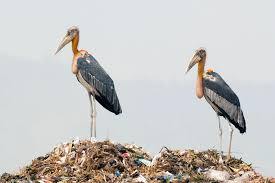
Hargila is one of the world’s rarest and most unique storks
The results have come in numbers. Nests in one Kamrup colony grew from 27 in 2007 to 250 by 2021, and that colony has since been recognised as an Important Bird Area. More than 500 stork chicks that fell from nests have been rescued by the group. The Hargila Army has planted 45,000 saplings near nesting trees and wetland areas. The greater adjutant population in Assam has grown from around 450 individuals to between 1,800 and 2,000, currently the largest such population anywhere in the world. The IUCN revised the species status from Endangered to Near Threatened. In 2024, a new nesting colony was found in Kulhati with 52 nests recorded in a single year. Barman was named in Time magazine’s Women of the Year list for 2025.
The Hargila Army also produces stork-themed textiles and organises ceremonies to mark the birth of chicks, turning a bird once seen as a bad omen into a source of local identity.